Get in touch with QJKH Company
ISO 13849 PLd Approved
Safety for AGV
Safety Laser Scanner & LiDAR Solutions for AGV & Mobile Robots
QJKH safety laser scanners enable dual-purpose AGV and AMR fleet protection and navigation. Proven worldwide in warehouse and factory automation.
- Protect Your AGV Fleet.
- Navigate Safely.
- Comply Confidently.
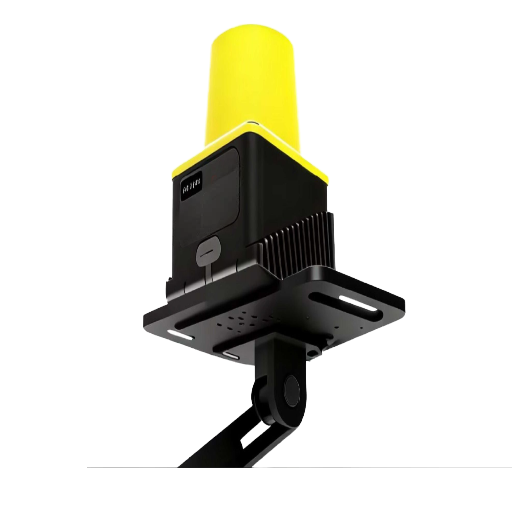
270°–300°
Field of View
PLd / SIL 2
Safety Rating
5–30m
Detection Range
IP65–IP67
Ingress Protection
20+
Years Expertise
Global
Shipping & Support
AGV Safety Sensor Essentials: Why Fleets Need Them & How They Work
Every warehouse and factory floor powered by AGVs has the same fundamental challenge: avoiding collisions between autonomous vehicles and people, machines, or pallets. Conventional solutions—bumpers that activate on contact, safety mats that sense weight—react only after the impact occurs. At that point, it’s already happening.
01
A safety laser scanner is a 2D LiDAR-based electro-sensitive protection device (ESPE) that continuously projects pulsed laser beams across a defined plane and detects objects by measuring the time it takes for reflected pulses to return. Rather than physically colliding with an obstacle in their path, the AGV’s laser scanner detects the hazard in advance—warning the vehicle’s control system in time to back away or stop.
02
This concept relies on configurable safety zones. Each laser scanner establishes three or more safety zones: an identifier zone that prompts deceleration when a pedestrian or obstacle enters, a warning zone that causes the AGV to brake, and a protection zone closest to the vehicle that commands an immediate stop.
Newer laser scanners offer dynamic zone switching—automatically choosing the correct set of safety zones depending on AGV speed, trajectory, or load. For example, a vehicle traveling 2 m/sec down a corridor fires a different set of laser protection zones than the same vehicle traveling 0.5 m/sec through a junction.
03
QJKH provides over 20 years of laser scanner innovation and safety device manufacturing expertise from our bases in Qingzhou City, Qinzhou District to the global automation industry. Our safety laser scanners safeguard AGV and AMR fleets in warehouse logistics, automotive manufacturing, and pharmaceutical production—providing dependable, certified instrumentation for integrators and OEMs that need a safe, secure means of mobility.
Once the logic of laser-based collision avoidance is established, selecting the appropriate laser scanner model for your AGV fleet can be straightforward.
QJKH Sensor Series: Safety Scanners & LiDAR for AGV Navigation
Choosing the correct sensor depends on your AGV platform, environment, and whether your fleet requires dedicated safety, navigation, or integrated safety/navigation in one device. QJKH manufactures three ranges of laser scanner optimized for different AGV and AMR needs.
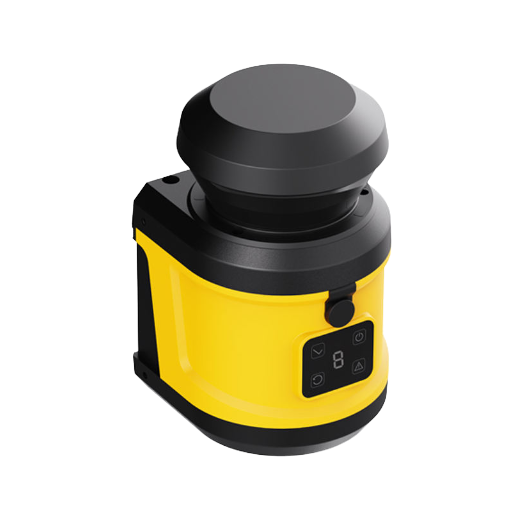
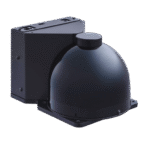
Safety Laser Scanner
AGV obstacle avoidance and fleet protection for human-robot shared spaces.
- Scanning Angle: 300°
- Safety Range: 20m
- Warning Range: 30m
- IP Rating: IP67
- Resolution: 0.5°
- Scan Frequency: 25 Hz
- Laser: 905nm, Class I
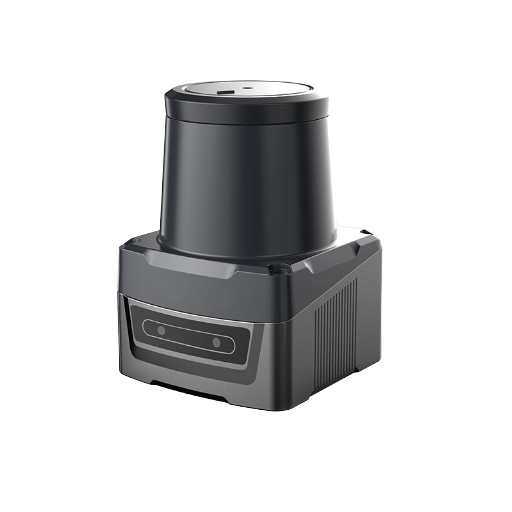
2D Navigation LiDAR
Precarious robot navigation using combined SLAM and reflector techniques.
- FOV: 270°
- Range: 15m
- Output: Point cloud
- Interface: Ethernet
- Use: SLAM + reflector nav
- Mount: Top/front
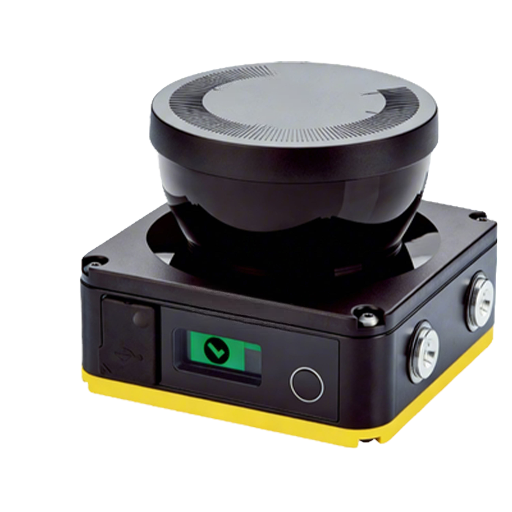
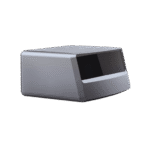
Compact Safety Scanner
Compact safety laser scanner suitable for small AMR platforms where space and weight are critical.
- Scanning Angle: 270°
- Safety Range: 5m
- Weight: 150g
- IP Rating: IP65
- Form Factor: Compact
- Mount: Flush/bracket
| Parameter | Safety Scanner | 2D Nav LiDAR | Compact Scanner |
|---|---|---|---|
| Scanning Angle | 300° | 270° | 270° |
| Safety Range | 20m | N/A (non-safety) | 5m |
| Warning Range | 30m | N/A | 8m |
| IP Rating | IP67 | IP65 | IP65 |
| Weight | ~370g | ~280g | 150g |
| Interface | OSSD + Ethernet | Ethernet | OSSD + Ethernet |
| Safety Rating | PLd / SIL 2 | — | PLd / SIL 2 |
| Application | Speed | Environment | Recommended | Key Spec |
|---|---|---|---|---|
| Warehouse AGV | ≤2 m/s | Indoor, dust | Safety Scanner Pro | 20m, 300°, IP67 |
| Production AMR | ≤1.5 m/s | Indoor, tight spaces | Compact Scanner | 5m, 270°, 150g |
| Outdoor AGV | ≤3 m/s | Rain, dust exposure | Safety Scanner Pro | 30m warning, IP67 |
| Forklift AGV | ≤3 m/s | Indoor/outdoor mixed | Nav LiDAR + Scanner | Dual: navigation + safety |
LiDAR Navigation: SLAM vs Reflector vs Mixed-Mode
Key sensor capabilities AGV navigation To enable autonomous operating concepts, navigation sensors must operate in these three modes; SLAM images the environment from the point cloud in real time, so the vehicle can operate without infrastructure; this means no reflectors or magnetic tape are needed. The 2D LiDAR sends a laser beam 360 around and presents its contour map to the server, outperforming cameras under various lighting conditions. To over comes difficulties with reflectors, reflector lock on measures angles and distances to stationary reflective targets enabling repeatable 5mm accuracy. Combining both; the mix-mode scenarios draw on the strength of mid-range 2D LiDAR providing SLAM navigation information; and with reflector lock on when the vehicle approaches critical docking or transfer positions. These vehicle navigation capabilities provide the entire Auto-mated Guided Vehicle ( AGV ) and autonomous robotics environment – including warehouse AGVs to production line AMRs. QJKH 2D Lidar Sensors fulfill all three scenarios; by allowing re-programmable firmware, integrators can select navigation plan in addition to the ability to continuously monitor zone status.
Not sure which model fits your AGV?
Get a Model RecommendationSafety Scanner vs Bumpers, Mats & Light Curtains — Data Comparison
AGV integrators and facility managers typically compare a range of safeguarding technologies in their specification process. The table below shows concrete specifications – not opinion, descriptive ratings – so that you can make an informed choice for your fleet.
| Feature | Safety Laser Scanner | Safety Light Curtain | Safety Mat | Bumper / Edge |
|---|---|---|---|---|
| Detection Range | 5–30m configurable | 0.5–20m (fixed line) | Contact only | Contact only |
| Response Time | <80ms typical | <14ms | Immediate (contact) | Immediate (contact) |
| Coverage Angle | 270°–300° | Fixed line | Floor area | Edge strip |
| Min. Detectable Object | 70mm (leg/torso) | 14–30mm (finger/hand) | Full body | Full body |
| Mobile AGV/AMR Use | ✔ Native (dual safety+nav) | ✖ Stationary only | ✖ Fixed floor | ✔ Basic contact |
| Dynamic Zone Switching | ✔ Speed-adaptive | ✖ | ✖ | ✖ |
| Environmental Resistance | IP65–IP67, dust/vibration | Sensitive to dust/sparks | Weather-sensitive | Mechanically durable |
| Navigation Capability | ✔ Dual-use | ✖ | ✖ | ✖ |
| IEC Classification | Type 3 (IEC 61496-3) | Type 2/4 (IEC 61496-2) | N/A | N/A |
Application Advantages
In the AGV/AMR application the safety laser scanner has several distinct advantages. First, its dual-use capability—using one sensor to provide both obstacle warning and navigational information eliminates the added expense of separate obstacle avoidance and navigation sensor hardware. Second, the safety laser scanner is floor mounted, well below the spark and dust plane that severely degrades optical light curtains during welding or grinding. And third, instead of several light curtain emitter-receiver pairs that must all be aligned and harmonized to the optical axes, safety laser scanners cover anywhere from 270 degrees up to 300 degree arc, minimizing the problems caused by road vibrations and AGV bounce bringing the optical sensor axes out of parallel. Finally, the adjustable detection range (5 meters up to 30 meters) enables integrators to define the potential hazardous zone actual operating conditions without compromising or redesigning equipment geometry.
AGV Safety in Action: Warehouse & Factory Deployment Outcomes
This safety scanner performance becomes most visible in the true operating environment – where falling inventories, unanticipated pedestrians and crossing highways challenge the system relentlessly every minute.
Warehouse Pallet AGV
In a high-bay warehouse setting, pallet AGVs fitted with QJKH safety laser scanners identify fallen boxes, pedestrians crossing and forklift movements 20m in advance. When this warning zone is reached, the forklift is slowed in a controlled fashion before personnel appear in the protection zone, which resulted in significantly fewer unplanned emergency stops. Hard stops between pallets lead to damage, and reducing the chance of these occurred on an improved throughput of the fleet across shift changeovers.
Production Floor AMR
When an autonomous mobile robot (AMR) moves between assembly stations, it encounters crowded intersection facilities. Utilizes dynamic zone switching to change the scanner’s guarded geometry according to the AMR’s speed and turning angle, a narrow obstacle-resisting elongated zone going forward in a straight corridor, or a broader zone in intersection. And track auxiliary human-robot cooperation in the same industrial park when there are no physical force fields or floor markings, to limit productivity layout options.
Distribution Center Fleet
Designed for demanding automatic guided vehicle (AGV) applications, medium- and large-size fleet installations of 50+ AGV with 20+ laser scanners door-to-door through operating corridors. Having high to multi-shift traffic may require mounting two or three laser scanners on a single platform vehicle, particularly in facilities where operators and equipment move with high frequency in and out of blind areas. Reliable detection as the fleet weaves through key risk points requires multiple laser scanners pointed in any circle, continuous operation of front and backwards scanners, and the ability to detect personnel approaching from any angle—sans blind spots the single-scanner format allows for reversing maneuvering or in nominal operation. End result: uncompromising detection weaved into a fleet throughput without sacrificing safety or incurring downtime for collisions.
Return on Investment
On these level the facility has experience implementing laser scanner safety options in a real environment and achieved reductions in downtime related to product damage and collision investigations. Cost-benefit analysis has determined that additional scanner investment can be paid back many times-over through savings in investigator time and material cost.
Industry Applications
See how safety scanners fit your operation.
Request a Free SampleNavigating AGV Safety Standards: Certifications & Compliance
Initial designs, builds and tests to fulfill the standard(s).
ISO 13849-1: PLd
Classifies as a Category 3 (Performance Level d) active autonomous opto-electronic protective device (AOPD)—setting the standard for laser scanner reliability used as AI2 requirements for machine lifeline detection in hazardous AGV applications.
IEC 61496-3: Type 3
Standard for laser-finder device approval in hazardous machine environments that applies to diffuse-reflection laser scanners—documented in standards EN61496-1,1,2.
IEC 61508: SIL 2
Safety Integrity Level 2 (SIL-2) certification with identified proof of quantified functional operation failure when associated with AGV systems where safety is non-negotiable. Laser scanner system project planning will reflect successful completion of system certification.
CE Marking
Show a document for each QJKH laser scanner recording the harmonized EU safety machinery directives (CE mark).
EMC Compliance
Demonstrates that your laser scanner system was tested to resist ascertained electro-magnetic interference (EMI) such as occurs in multi-motor/multivariable superimposition scenarios typical of AGV control schemes.
Procurement Guide: Pricing, Lead Time & After-Sales Support
Pricing Factors Framework
Looking at laser scanner pricing, there are many influencing factors, both in terms of the technical aspects of the scanners and the commercial considerations. In order to have a good idea of the potential costs, give consideration to the following points.
| Factor | How It Affects Cost |
|---|---|
| Scanner Type | Safety-rated scanners (with OSSD outputs and PLd certification) carry higher component and testing costs than navigation-only LiDAR sensors. |
| Detection Range | Longer-range models (20–30m) require higher-quality optics and receivers than short-range (5m) compact units. |
| Scanning Angle | A 300° field of view uses more emitter/receiver elements than 270° models. |
| IP Rating | IP67 sealing for outdoor and washdown environments adds material and assembly cost over IP65. |
| Interface Options | Models with Ethernet + OSSD + configurable I/O cost more than basic serial-output units. |
| Order Quantity | Fleet-scale orders receive volume pricing. Contact us for quantity-based quotations. |
Lead Time
Generate a call for current lead time estimates according to model and order quantity. For standard models, they are shipped from the factory of our Hangzhou, Chn server and clock on delivery is controlled by pre-scheduled manufacturing runs that arrive to support OEM volume timescales.
OEM Customization
QJKH partners with the entire value chain of AGV providers for a private label or OEM fairing program. Engage in a pathway defined by an initial design review with your engineering team, followed by functional prototype deployment/conformance validation, then production ramp up. Add on firmware configuration, mounting fixtures, material identification as needed.
After-Sales Support
Your purchasing of each scanner defines the many demands of effectively and safely deploying into your integrator-based OEM product lines—the requirements for technical support, spare part availability, firmware release enablement, and aggregation of needs on your site.
Global Logistics
Worldwide shipping with DDP and FOB options for AGV consultancies and integrator firms serving global markets. Complete documentation including all required export compliances—prepared in house will expediently unify to ensure onsite delivery to your facility or dealer partners.
Get your customized quote — response within 24 hours.
Contact Us NowFrequently Asked Questions — Safety Laser Scanner for AGV & AMR
A safety laser scanner is a 2D LiDAR-based protective device, falling under the category of ESPE(ESPE) according to IEC 61496-3. It projects and reads pulsed laser beams across the protective installation plane and takes time-of-flight reflections to identify personnel or obstacles within a safe traveling path of an Automated Guided Vehicle (AGV). When a person penetrates the warning zone, the AGV slows down. If the individual intrudes into the protection zone, the scanner outputs a hardwired OSSD signal to halt the AGV immediately. This dual-zone detection capability prevents collision before contacting, representing a significant upgrade compared to bumper or safety mat sensors that only bi-metal contacts after impact.
AGV facility managers most often inquire about operating AGVs in real-world, manufacturing facilities- not pharmaceutical clean rooms. QJKH safety scanners bear IP65 to 67 ingress protection rating, which guarantees a sealed protective environment from elements and ingress. The 905nm infrared laser’s function is not affected by the specific light condition of the subject environment, whether total darkness or excessive over-head illumination. The sensors are accusto vibration with industrial- standard hardness testing, and the off-axis optica assembly uses no moving mirrors thus ensuring a consistent reflection by mechanical shocks. Sensor window contamination also triggers an alarm.
In the first place, consider three factors: the most AGV’s maximum operational speed, the user’s specific environment, and the known intended dual-use of safety scanner for both safety and navigation. 2 m/s warehouse AGV’s balance perfectly with the 20m, 300 full-range safety scanner;19mm compact scanner is also sufficient. 150g compact non-safety scanner is typical for UL2200-compliant AGV in tight production environments. Any Laser navigation LiDAR paired with a safety scanner will suit both safety and navigation needs. Please call our design engineers with your specifications.
Your AGV safety scanner should at least meet ISO 13849-1 Levels (Performance Level d), IEC 61496-3 Type 3 ESPE category configuration, and IEC 61508 SIL 2 certification standards. Levels and category confirm operation under Category 3 architectural architecture. SIL confirms the acceptable numbers of failures per time in safety-critical functions. SC are the legal standards for European destinations. Our safety AGV scanners come with certification documentation.
Yes. The safety scanners are designed to be compatible with existing AGV safety relay systems or PLCs via OSSD outputs and mount with clamp or flush-mount supports. The scanners will not demand system reconfiguration. The compact 150g scanners are weight-neutral additions to AGV installations. Workflows average less than one shift per vehicle for retrofit wiring, programming, and zone setup.
A safety laser scanner’s price will vary based on its detection range, scanning angle, IP rating, communication interface, and type. Dual certification safety units are costlier than navigation-only sensors. Wider angular scans or detect distances necessitate higher-grade optics at the same detection distance. Safeguard Vehicles based on a large fleet; see us for price schedule when you provide your specifications.
This question is always fun to field for AGV operators and integrators. Generally, a safety laser scanner will be configured as the primary protective device in most applications, making mechanical bumpers unnecessary. But some facility risk analyses or jurisdictions may call for a secondary contact protection device for application coverage redundancy. The real-world solution: operate the safety scanner as your primary contact less detector, and only add bumpers where your risk assessment or customer specs call for belt-and-suspenders coverage. Increasingly, today’s AGV designs go to scanner-only implementations.
Some AGV platforms use a single sensor for both safety and navigation, others lock in a pair of dedicated sensors for those functions. Dual-function scanners provide safety-rated OSSD outputs for zone protection, as well as point-cloud data for SLAM-based or reflector-based navigation. Benefits: one sensor, one Mount point, one data stream. Downsides: the dedicated navigation LiDAR can be optimized for range and resolution without needing to meet safety certification requirements. QJKH supports both configurations: single dual-use safety/nav sensor or linked safety + navigation sensor pairings, allowing integrators to select based on their AGV architecture.
Trending now