Get in touch with QJKH Company
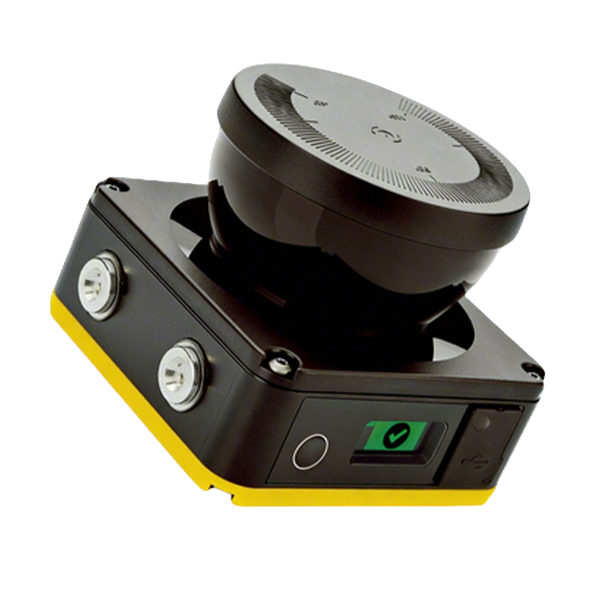
Compact Safety Laser Scanner — 276° Protection for AGV, AMR & Robotic Cells
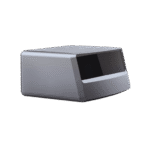
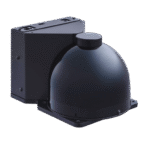
The CCH SH series compact safety laser scanner provides SIL 2 rated area protection with 256 dynamic zone groups, sub-50ms zone switching and a 95×71×50mm footprint that installs where old school safety devices aren’t practical. Designed for integrators to be able to reliably ship ASRS and walk/robotic cells without cumbersome hardware or alignment nightmares.
276°
Scanning Angle
3–5 m
Protection Radius
256
Zone Groups
IP65
Protection Rating
Why Fixed Guards and Safety Mats Fail Modern Automation Lines
A small form factor safety laser scanner uses time-of-flight laser pulses to sweep a 276° detection field and recognize objects and personnel passing into predefined protection zones – replacing mountains of physical fencing with a single sensor that can be installed in minutes. That subtle difference is meaningful in an automation environment because the safety devices that were acceptable half a decade ago are now the single greatest obstacle to optimizing throughput.
Physical fences lock your layout in stone. Each time your production department adjusts a station or reroutes a mobile robot through the parking lot, those completed weldments have to be cut apart and its structural components rejoined in a different configuration – sometimes requiring production downtime, graphic programming, and contractor visits. The safety device responsible for protecting your people is suddenly the most significant barrier to making your automation objectives a reality.
Safety mats make the shop floor inoperable. Parts fall off machines, forklift drivers plow through, and the shavings from your most recent CNC job compromise the internal wire netting and mesh. When a safety mat is out of commission, the safety zone it monitored lapses into a period of undefended operation until maintenance has time to replace the failed component – which means the entire line grinds to a halt.
Light curtains need to be installed with two rigid mount points, perfectly aligned in order to avoid always being ready for every object, forklift, or member of the workforce causing parts to go bouncing down the length of the shop. That mounts a recurring validation and calibration process in to the safeguard itself – effectively destroying the perceived value of the safety system.
The CCH SH series safety laser scanner overcomes all of these obstacles. One sensor with one mount point provides 276° coverage. No pillar calibration required. No wire netting to kink or crack. No structural steel to weld, and then bend, and then cut apart and weld back together. When the process layout shifts, you update your safety table during the software reprogramming – without hot works or waits on the contractor.
Safety Device Selection Matrix
| Criterion | Safety Laser Scanner | Safety Light Curtain | Safety Mat | Hard Guard (Fence) |
|---|---|---|---|---|
| Detection Method | Time-of-flight laser scan (276° area) | Infrared beam array (single plane) | Pressure-sensitive wire grid | Physical barrier (no detection) |
| Coverage Shape | 2D area, 3–5m radius | Linear plane, 0.3–20m height | Rectangular mat surface | Perimeter enclosure |
| Reconfiguration | Software-based, <5 min | Physical repositioning + realignment | New mat segments required | Welding/bolting rework |
| AGV/Mobile Robot Use | Yes — onboard mounting, bank switching | No — requires fixed pillars | No — floor-mounted only | No — obstructs travel path |
| Failure Mode Visibility | Self-diagnostics, OSSD output | Alignment drift (silent) | Wire breakage (intermittent) | Structural damage (visual) |
| Typical Safety Rating | Type 3 / SIL 2 / PL d | Type 2–4 / SIL 1–3 / PL c–e | PL c typical | N/A (passive) |
CCH SH Series — Models, Specifications & Configuration Guide
Our SH series consists of four products evenly split across two operating ranges and two safety output arrangements. The models use the same footprint 95×71×50mm, the same 276° scanning field of view and the same fine 0.1° angular resolution. The distinction lies in the protection radius and quantity of safety outputs the product provides to the appropriate automation control architecture.
3m RANGE — SINGLE OUTPUT
SH27-03S
- Protection: 3m @ 1.8% reflectivity
- Alarm Zone: 10m
- Measurement: 40m
- Output: Single OSSD (PNP)
- Mode: PAA + PP configurable
- Best For: Small robotic cells, compact workstations
3m RANGE — DUAL OUTPUT
SH27-03D
- Protection: 3m @ 1.8% reflectivity
- Alarm Zone: 10m
- Measurement: 40m
- Output: Dual OSSD (PNP)
- Mode: PAA + PP configurable
- Best For: Dual-zone guarding, dual safety relay circuits
5m RANGE — SINGLE OUTPUT
SH27-05S
- Protection: 5m @ 1.8% reflectivity
- Alarm Zone: 20m
- Measurement: 60m
- Output: Single OSSD (PNP)
- Mode: PAA + PP configurable
- Best For: AGV/AMR navigation, wide-area monitoring
5m RANGE — DUAL OUTPUT
SH27-05D
- Protection: 5m @ 1.8% reflectivity
- Alarm Zone: 20m
- Measurement: 60m
- Output: Dual OSSD (PNP)
- Mode: PAA + PP configurable
- Best For: Large production lines, multi-zone safety systems
Complete Technical Specifications — All SH Series Models
| Parameter | SH27-03S / 03D | SH27-05S / 05D |
|---|---|---|
| Safety Classification | Type 3 (IEC 61496-3), SIL 2 (IEC 61508), Cat. 3 / PL d (ISO 13849-1) | |
| Scanning Angle | 276° | |
| Angular Resolution | 0.1° | |
| Protection Radius | 3m @ 1.8% reflectivity | 5m @ 1.8% reflectivity |
| Alarm Zone | 10m | 20m |
| Measurement Range | 40m | 60m |
| Object Resolution | 70mm @ maximum protection radius | |
| Response Time | 100ms (configurable) | |
| Zone Groups | 64 static / 256 dynamic (switchable via I/O or Ethernet) | |
| Zone Switching | <50ms millisecond-level strategy switching | |
| Protection Modes | PAA (protection + dual warning) / PP (dual protection) | |
| Laser | 905nm, Class 1 (eye-safe) | |
| Safety Output | PNP, OSSD | |
| Power Supply | DC 24V ±20%, <4W consumption | |
| Dimensions | 95 × 71 × 50mm | |
| Protection Rating | IP65 | |
| Operating Temp | -10°C to +50°C | |
Configuration modes explained: In PAA mode the detector acquires one protection zone, as well as two non-intersecting warning zones – this configuration is perfect for an early warning PLC signal so that a machine is aware that a worker is in danger of stepping into the hazardous zone, and can slow to a stop in good time. PP mode delivers two dedicated protection zones with dual dedicated safety outputs to a controller, appropriate for an application where you want a safety system with a two channel safety architecture.
Model-to-Application Decision Matrix
| Application | Recommended Model | Reason |
|---|---|---|
| Small robotic cell (<3m radius) | SH27-03S | 3m protection covers the cell; single output simplifies wiring |
| Dual-zone workstation guarding | SH27-03D | Dual OSSD channels for independent zone-to-relay mapping |
| AGV/AMR onboard navigation | SH27-05S | 5m range + 256 dynamic zones for path-dependent switching |
| Large production line perimeter | SH27-05D | 5m range + dual protection mode (PP) for layered boundaries |
| Warehouse forklift zone | SH27-05S | 20m alarm zone provides early warning for approaching vehicles |
Compact Safety Laser Scanner vs Traditional Safety Devices — Data-Driven Comparison
Selecting an area of protection and access protection safety components requires absolute figures, not broad based reliability data. The comparison chart below compares the CCH safety laser scanner to competing alternatives like light curtains, safety mats, and steel fences on performance metrics that determine your maintenance, downtime, and productivity in safeguarding manufactured machinery.
| Feature | Safety Laser Scanner | Safety Light Curtain | Safety Mat | Hard Guard |
|---|---|---|---|---|
| Detection Coverage | 276° area, 3–5m radius | Single beam plane | Contact area only | No detection |
| Zone Flexibility | 256 configurable groups | Fixed beam path | Fixed shape/size | Welded/bolted |
| AGV/AMR Compatible | Yes — bank switching | No | No | No |
| Resolution | 70mm @ max range | 14–30mm (finger/hand) | Full body | N/A |
| Safety Rating | Type 3 / SIL 2 / PL d | Type 2–4 / SIL 1–3 / PL c–e | PL c typical | N/A |
| Installation | Single mount point | Dual pillars + alignment | Floor coverage required | Welding/bolting |
| Relocation | Reprogram zones in software | Reinstall + realign beams | New mats required | Structural rework |
| Maintenance | Self-diagnostics, OSSD monitoring | Recurring alignment checks | Wire breakage risk | Low but inflexible |
The numbers tell a clear story. Light curtains protect a single plane — effective for point-of-operation guarding on a press brake, but they cannot detect objects approaching from the side or behind. A safety area scanner covers a 276° field from one device, which means one SH series unit replaces what would require two or three light curtains mounted on separate pillar pairs. That reduces hardware cost, eliminates multi-device alignment, and cuts installation labor by at least half. Safety mats suffer from a different problem: they work by contact pressure on a wire grid, and any environment with falling parts, rolling carts, or forklift traffic will eventually fracture that grid. When the wire breaks, the mat either fails safe (nuisance shutdown) or, worse, fails to detect — neither outcome is acceptable in a production environment running around the clock. Light curtains require continuously managing alignment across temperature shifts, vibration, and incidental contact — a maintenance burden that accumulates over months. The CCH scanner’s self-diagnostics and OSSD outputs report status to your safety controller in real time, so you know immediately if something changes. For cost-effective area protection in environments where layouts shift quarterly or faster, a safety laser scanner delivers measurable advantages in flexibility, reliability, and total cost of ownership.
Test the SH series on your own site- obligation free.
Application Spotlight: AGV Navigation, Robotic Cells & Production Line Safety
Specifications show what the scanner does. Applications show what it solves. Each example below identifies the same pattern: The safety scenario your team needs to operate under, The fundamental problem traditional devices are incapable of fixing, The precise feature of the SH series that provides the fix. From machine transit through multi-zone zones varying obstacle mass and robot-focused cell entry to continuous material pass, these are the five deployment strategies most common among our partners deploying automated guided vehicle systems, robotic work cell safeguarding, and production line safeguarding systems.
1. AGV & AMR Navigation — Dynamic Zone Switching at Speed
- Problem: AGV’s and AMR’s move through different types of obstacle profiles – narrow aisles, open gateways, loading bays. A fixed, single protection zone causes either a false stop in the narrow aisle or an unacceptable gap in the open gateway.
- Fix: By switching the dynamic zone group configuration down to the millisecond via I/O or Ethernet, the AGV’s PLC can send a protection zone change command when they move from one segment of a route to the next one, and the safety laser scanner can change its zone configuration within the time it takes for the laser to scan the field.
- Key Feature: Milliseconds-range zone strategy switch + bank switching via external controller input. The capability that makes the safety laser scanner for AGV’s doable in real-time.
2. Robotic Cell Perimeter Guarding — Multi-Zone Monitoring
- Problem: Robotic cell needs access protection that discriminates between a maintenance engineer approaching the cell and a pallet moving through a material pass.
- Fix: In the fields of the SH series configuration module, select PP mode (dual protection) and differential OSSD allocation to different cell entry points. Make zone A guard the maintenance access door; Zone B guard the material pass. Let the robot decelerate upon detection in zone A and actually stop upon detection in zone B.
- Key Feature: Flexibility to PAA/PP modes + 276° viewing angle with a single corner-mounted unit can cover the entire cell.
3. Production Line Access Monitoring — Muting for Material Pass-Through
- Problem: Working through conveyor-fed production lines, the operators must always be in a detectable position while the material is entering the hazardous zone. Hard guards with interlocked doors tie up excess time and materials in the bridge cycles; every cycle costs seconds, those seconds add up to hours per year.
- Fix: Use the configurable warning zone boundary and protection zone boundary to create a “pipeline” within the hazard zone that ignores operator presence during conveyor active state, and restarts normal operation when it deactivates.
- Key Feature: Configurable Field set management PLC integration, existing PLC controls the protection mode of the laser scanner
4. Palletizer & Depalletizer — Vertical Mounting with Wide Coverage
- Problem: Palletizing applications, overhead robotic arms, stacks of the product at different elevations, and forklifts approach from any of several directions. Light curtains only guard one plane, safety mats get broken every time pallets are dropped.
- Fix: Mount the safety laser scanner vertically or at an acute angle to detect intrusions into the palletizing volume at floor level. These angles provide approaching detection from just about any direction, and the alarm zone of 20 meters (SH27-05 models) provides the liftoff warning.
- Key Feature: IP65 enclosure offers dust and washdown resistance during side-of-line packaging applications, form factor 95×71×50mm provides compatibility with standard mounting brackets designed for existing pillar mounting.
5. Warehouse Logistics — Forklift Zone Separation
- Issue: Pedestrian/ forklift collisions are still one of the leading incidence factors in warehouse injury. Painted floor markings and signage are basic safety warnings that depend on discrete human behaviors that considerably deteriorate during rotating or high risk conditions.
- Solution: Deploy SH series scanners at all zone demarcation points to track and detect objects instantaneously. Move into the warning zone, and a siren or flashing light will activate; move into the protection zone, and the facility management system is notified to move barriers or reduce vehicle velocity accordingly.
- Key Feature: Instantaneous detection with 100ms response time + dual warning fields (PAA mode) creates a graduated alert system that significantly reduces nuisance stops without compromising safety compliance.
Total Cost of Ownership Framework
Deployments in high-volume fields typically demonstrate a 40-60% decrease in nuisance downtime onset duration over comfort mats in facilities with heavy material handling. Zone reprogramming is minutes for each changeover phase, versus hours to relocate physical barriers. Through the life cycle of a 3-year use-case, costs of disaligned operation, maintenance, and rework to maintain a hard guard over a flexible light curtain or protective mat is directly reflected in your repeatable savings of both hard goods and productivity time.
Industry average figures – contact CCH for application-specific ROI analysis tailored to your production environment, shift schedule, and changeover frequency.
“Our team designed the SH series with 256 dynamic zone groups because our AGV integrator partners need sub-50ms zone switching during high-velocity navigation – that’s the threshold where operators begin to miss delays in the safety response.”
Safety Certifications & Compliance: IEC 61496 Type 3, IEC 61508 SIL 2, ISO 13849 PL d
Certifications are not marketing claims – they are the legal and technical prerequisites for deploying a safety sensor in your machinery. Here is exactly what each standard means for your purchasing decision and your compliance obligations.
T3
Type 3
IEC 61496-3
SIL2
SIL 2
IEC 61508
PLd
PL d / Cat. 3
ISO 13849-1
IP65
Dust & Water
Ingress Protection
C1
Class 1 Laser
905nm Eye-Safe
Type 3 — IEC 61496-3: Diffuse Reflection ESPE
Type 3 classification under IEC 61496-3 certifies the SH series as an electro-sensitive protective equipment (ESPE) using diffuse reflection – meaning it detects objects by measuring laser pulses bounced off surfaces, not through a break-beam method. For your integration, this means the scanner works as a standalone safety device without requiring a reflector or receiver unit on the opposite side. One unit, one mount point, full area coverage.
SIL 2 — IEC 61508: Functional Safety Integrity
Safety Integrity Level 2 under IEC 61508 certifies that the scanner’s dangerous failure rate falls between 10-7 and 10-6 per hour – meaning fewer than one dangerous undetected failure per million operating hours. For procurement, SIL 2 satisfies the safety level requirements of the majority of industrial robotic cell and AGV applications. Your safety engineer can reference this rating directly in the risk assessment without additional validation testing.
PL d / Category 3 — ISO 13849-1: Control System Safety
Performance level d with Category 3 architecture under ISO 13849-1 means a single fault within the scanner does not impair its safety function. The dual-channel internal architecture detects faults and maintains the safe state. For your specific safety assessment: PL d covers applications where the risk of serious injury requires a high-reliability safety-related control system, which includes most robotic and AGV deployments under ISO 10218 and current EN/ISO standards.
IP65 — Industrial Environment Protection
The IP65 rating of the SH series indicates the capabilities of the housing to prevent ingress of solids (dust-tight) and protect the electronics from water jets generated from any angle. This is not a laboratory rating – this is the value indicating that your scanner functioned flawlessly during its factory qualifications in the presence of wash-down procedures, airborne particulates from machining and food handling, and mist of cutting fluid in a metalworking application, warehouse, or processing application.
Class 1 Laser — 905nm Eye-Safe Operation
The 905nm infrared laser falls within Class 1 laser class. This means that no laser safety goggles, restricted access zones, or laser warning signs are required in the area of operation. This allows your EHS personnel to place the equipment in a mission-critical application with a co-worker presence long-term without adding laser-specific procedures to your safety protocols.
Need certification documents for your compliance file?
Quick InquiryProcurement Guide: Pricing, Lead Time & OEM Customization
Through evaluation of the laser specifications, confirmation of the certifications in the product datasheet meet your safety requirements, and identification of the appropriate SH series model for your solution, you are now ready to move forward with your purchase order. Here is the information on the product to use in the purchase order process while we work through pricing, lead time, volume discounts, and customization options such as OEM packaging into other platforms.
Pricing Factors
The price for the safety laser scanner is set by four variables: the model size (3m or 5m range, one or two output ports), the order quantity, the level of customization, and the type of connection (cable or integrated connector). To get the best price point for your buying process and application, rather than publish a price list that cannot easily be customized, we provide you with project-specific quotations within 24 hours of final specification you provide.
Request a Quote for Your Configuration →Lead Time
The standard models of the SH series are shipped from our Hangzhou, China manufacturing hub. Waiting to ship custom OEM options such as branding or pre-loaded zone configurations will add a few days to our normal delivery time. In order to provide integrators who are evaluating the equipment for proof-of-concept runs quick turnaround times, we maintain a small inventory of evaluation devices.
MOQ & Evaluation Orders
We will work with you on a flexible minimum order quantity for evaluation purposes. If you want one or two units to evaluate the suitability of the scanner in your system before ordering them into production, we are happy to support this need at no charge. Submit an application and we will send out a test model tailored to your needs.
OEM Customization
For OEM integration projects, we can OEM-customize the safety laser scanner in three areas: branding with your company logo or part number, interface configuration with your commonly used zones pre-loaded, and connector/cable configuration with your preferred connector types and cable lengths. Our engineering designers collaborate with your OEM design team to create ready-to-integrate production models.
Manufacturing & Quality Infrastructure
CCH operates a 5,000m² electronics workshop in the Hangzhou Airport Economic Zone with package and SMT production flows in place, utilizing MV-6e OMNI and MV-6e ICON 3D AOI systems for automatic defect inspection. Our 1,000m² R&D center maintains a dedicated test laboratory, and our core engineering team averages over 20 years’ design experience, including functional safety certification in multiple industries.
All units in the SH series are fully functional tested prior to delivery-not batch sample testing, but actual unit by unit verification. This is the simple configure and commission process your integration team needs.
FAQ — Safety Laser Scanner Selection & Integration
A compact safety laser scanner is a Type 3 ESPE because it projects laser pulses of 905nm at a 276° scan width, then measures the time-of-flight for each pulse reflection from an object within that field of view. The device (or scanner) activates a dedicated OS guard safety output when human/object intrusion is confirmed within pre-defined protection zones. For a more in-depth technical overview of scanning algorithms and zone configuration options, see our safety laser scanner technology guide.
A safety laser scanner can be used to afford protection to an entire area of a company – all from one device. It monitors the space of interest, not just a single planar beam or an orbit of fixed perimeter. Physical guard protection methods will still detect cross-objects, but do so at the cost of losing all detection capabilities when the layout is revised. Light curtain technology is not flexible enough for most industrial Robotic and AGV installations, (since they require accurate detection at many yards, not just a few inches). Laser scanner technology delivers the detection agility and flexible zone configurations our customers need.
Most industrial robots and AGV installations require a Type 3 per IEC 61496-3 (which is able to verify diffuse reflection ESPE classification), SIL 2 per IEC 61508 (which verifies functional safety integrity), and PL d / Category 3 per ISO 13849-1 (which verifies control system safety with single-fault surviving capability). The CCH SH series can be specified to meet all three of these key certification standards. Moreover, it is possible to examine the installation environment for dust or moisture protection within IP65 levels, or higher.
Yes. It is common application for a safety laser scanner, and the primary element of laser scanner design. The SH series safely switch 256 dynamic zone groups in sub-50 millisecond intervals which enables your AGV controller to dynamically reconfigure different sets of warning or protection zones as the vehicle travels along different path segments. With a compact 95×71×50mm design and the ability to operate directly on DC 24V power supplies, the safety lidar scanner is ideally suited to AGV applications. This is exactly the sort of dynamic reconfiguration functionality we require for our mobile platform.
Zone configuration is completed by connecting your machine or vehicle to CCH’s configuration software and connecting this software to the scanner by data interface. You configure (or “edit” in software syntax) all of the shapes, sizes, and placement preferences for all of the protection zones and warning zones within the 276° scan coverage for the scanner. Then, you “assign” all zone groups to either I/O input states, or Ethernet commands. The SH series can permanently store a total of 64 static zone groups in internal memory, or dynamically switch to display 256 zone groups if controlled externally. This arrangement always enables you to know how the scanner will react in operation.
The safety laser scanner costs vary widely based on the specifications related to range, angular resolution, number of zone groups, and certification profile. The SH series aims to compete with European-manufactured laser scanners by providing an equivalent Type 3/SIL 2/PL d certification profile at a more affordable cost. Request a quotation for your individual item and volume, and the advantage will be yours and yours alone!
The SH series from CCH is connectable with PLCs using the terminal’s OSSD safety outputs (PNP) for an electrical interface, plus digital I/O for zone switching. Safety outputs are connected directly to safety relay modules or safety PLCs. Switching of zone groups uses standard digital inputs or, in a more complex control system, Ethernet based communication. Facilities that use safety-related industrial protocols such as CIP Safety or PROFIsafe will take the scanner’s OSSD outputs and run them into a protocol specific safety module for OK safety system communication.
The SH product family is designed with integrated self-diagnostics which cycle through at all times, monitoring internal assemblies and the optical window. As would be expected for a laser scanner of this class, the only regular maintenance required is applying the periodic optical window cleaning, and the scanner then provides a window contamination warning for the point at which the camera optics begin to affect detection performance. There are no moving parts, no mechanical adjustments, no consumables, and no repeatability issues aside from tolerancelimited assembly processes. For comparison, health and longevity of safety mats (for damage along the wire grid) or light curtains (for outside-of-tolerance physical misalignment) are more uncertain than a compact laser scanner during what we would expect to be a multi-year end-user component lifetime.
Trending now