Get in touch with QJKH Company
3D LIDAR SENSOR
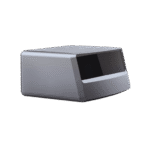
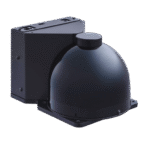
3D LiDAR Sensor — Industrial 3D Point Cloud Sensing
QJKH manufactures industrial-grade 3D LiDAR sensors that generate dense point clouds for AGV navigation, warehouse collision avoidance, and perimeter security — backed by 20+ years of safety sensor engineering and a dedicated factory in Hangzhou.
- Integration: ROS / ROS2
- Applications: AGV, AMR, Warehouse
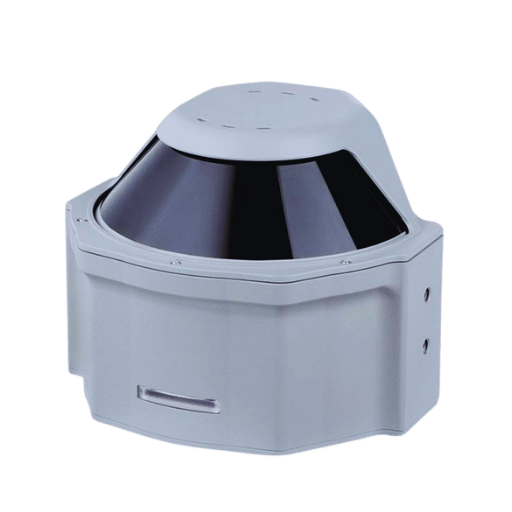
Detection Range
Up to 200 m
Field of View
360° × 90°
Point Cloud Density
300,000+ pts/sec
Protection Rating
IP67
Industrial 3D Sensing Challenges — How 3D LiDAR Solves Them
Forklift-related incidents alone account for roughly 100,000 accidents per year in U.S. warehouses, with an average cost of $180,000 per collision when you factor in medical expenses, downtime, and equipment damage. About 90% of all forklifts will be involved in an accident during their operational lifetime. These are not edge cases — they are predictable, preventable failures in spatial awareness.
-
•
Vertical blind spots
— 2D lidar scanners operate on a single horizontal plane, missing hanging chains, overhead beams, elevated conveyor segments, and low-profile pallets. -
•
False-alarm fatigue
— legacy proximity sensors trigger so many nuisance stops that operators disable safety systems entirely, trading annoyance for real risk. -
•
Missed detections
— camera-based vision fails in low light, dusty environments, and high-contrast glare zones common in warehouses and loading docks.
The 3D LiDAR Solution: Full-Volume Spatial Awareness
A 3D lidar sensor fires thousands of laser pulses per second across multiple vertical planes, generating a real-time 3D point cloud that captures every object in the detection zone — floor to ceiling, wall to wall. Unlike single-plane 2D lidar, this volumetric scan eliminates vertical blind spots entirely.
QJKH sensors bring industrial-grade three-dimensional spatial intelligence to warehouse automation, mobile robotics, and perimeter monitoring. Our multi-echo filtering algorithm separates actual obstacles from airborne dust, rain droplets, and fog particles — cutting false alarms by an order of magnitude compared to single-echo sensors.
PSP Chain: Pain → Cause → Solution → Proof
-
•
Pain — $180K average collision cost; OSHA citations; operational downtime
-
•
Root cause — 2D sensors cannot detect objects above or below the scan plane
-
•
Solution — 3D point cloud sensing captures full spatial volume in real time
-
•
Proof — Multi-echo 3D lidar scanning reduces false triggers while catching 100% of vertical-plane hazards that 2D scanners miss
QJKH 3D LiDAR Product Line — Models & Selection Guide
We engineer three tiers of 3D lidar sensors, each purpose-built for a distinct operating envelope. Selecting the right tier depends on your detection range requirement, environmental conditions, and integration interface.
Entry Tier
Short-Range Indoor 3D LiDAR
Designed for warehouse zones, conveyor monitoring, and indoor AGV collision avoidance where detection range under 30 m is sufficient.
- Range 0.1 – 30 m
- FoV 360° × 60°
- Density 60,000 pts/sec
- IP Rating IP65 rated
- Interface Ethernet, RS-485
Mid Tier
Medium-Range Multi-Purpose 3D LiDAR
The workhorse for AGV/AMR navigation, lidar 3d mapping, and logistics hubs requiring reliable object detection at mid distances.
- Range 0.1 – 100 m
- FoV 360° × 70°
- Density 150,000 pts/sec
- IP Rating IP67 rated
- Interface Ethernet, ROS/ROS2
Pro Tier
Long-Range Outdoor 3D LiDAR
Built for port automation, mining vehicle guidance, agriculture mapping, and outdoor perimeter security at extended ranges.
- Range 0.3 – 200 m
- FoV 360° × 90°
- Density 300,000+ pts/sec
- IP Rating IP67 rated
- Interface Ethernet, ROS/ROS2, CAN
Decision Matrix: Which Model Fits Your Application?
| Specification | Entry (Indoor) | Mid (Multi-Purpose) | Pro (Outdoor) |
|---|---|---|---|
| Detection Range | 0.1 – 30 m | 0.1 – 100 m | 0.3 – 200 m |
| Vertical FoV | 60° | 70° | 90° |
| Horizontal FoV | 360° | 360° | 360° |
| Points/sec | 60,000 | 150,000 | 300,000+ |
| IP Rating | IP65 | IP67 | IP67 |
| Interface | Ethernet, RS-485 | Ethernet, ROS/ROS2 | Ethernet, ROS/ROS2, CAN |
| Multi-Echo Filter | Basic | Advanced | Advanced + Rain Mode |
| Best For | Warehouse, Conveyor | AGV, AMR, Logistics | Port, Mining, Agriculture |
“We spent three years developing our multi-echo filtering algorithm specifically for warehouse dust conditions — it’s what separates our sensors from consumer-grade units. Every unit ships from our Hangzhou factory with a 48-hour burn-in test.
3D LiDAR vs 2D LiDAR vs Camera — Scanning Performance Comparison
Every sensing technology carries trade-offs. The table below compares four common approaches across the metrics that matter most in industrial deployments: range, environmental tolerance, classification capability, and cost.
| Feature | 3D LiDAR | 2D LiDAR | Camera / Vision | Radar |
|---|---|---|---|---|
| Detection Range | Up to 200 m | Up to 40 m | Up to 15 m | Up to 300 m |
| Vertical FoV | 30° – 90° | 0° (single plane) | 60° – 120° | 10° – 20° |
| Point Density | 300,000+ pts/sec | ~10,000 pts/sec | N/A (pixel-based) | Low (sparse returns) |
| Darkness Operation | Yes — active illumination | Yes | No — requires ambient light | Yes |
| Dust / Fog Tolerance | Multi-echo filter | Limited | Poor | Good |
| Object Classification | 3D shape + volume | 2D contour only | Color + shape + texture | Velocity only |
| Relative Cost/Unit | $$$ | $$ | $ | $$ |
When 3D LiDAR Is the Right Choice
Lidar scanning in three dimensions becomes the clear winner when your application demands simultaneous range accuracy, volumetric coverage, and environmental resilience. A 3D scanner generates dense point clouds that enable precise lidar object detection regardless of lighting — something cameras cannot match in dark loading docks or dusty processing halls. For lidar 3d scanning applications where you need to detect objects across a wide field of view, classify them by 3D shape, and feed centimeter-accurate localization data to a ROS-based robotics stack, no other single sensor technology delivers the same combination of capabilities.
When to Consider Sensor Fusion
- 3D LiDAR + Camera — Pair geometric point cloud data with color/texture classification for picking and sorting applications.
- 3D LiDAR + Radar — Combine precise short-to-mid range 3D scanning with long-range velocity tracking for outdoor mobile platforms.
- 3D LiDAR + 2D Safety Scanner — Use a certified 2D safety laser scanner for SIL-rated emergency stops while the 3D lidar handles navigation and mapping.
Case Study: Improving LiDAR 3D Scanning Accuracy for Warehouse Automation
$180,000
Average cost per forklift collision avoided with 3D spatial awareness — including medical, equipment, and downtime expenses.
The economic case for deploying 3D lidar in industrial environments is built on collision avoidance, uptime improvement, and labor reallocation. Below are three application scenarios where QJKH sensors deliver measurable value.
Collision Avoidance in High-Traffic Zones
High-traffic warehouse zones create constant near-miss conditions between manned forklifts, pedestrians, and automated guided vehicles. A 3D lidar sensor mounted at forklift mast height detects both floor-level pallets and overhead obstructions that 2D scanners cannot see. Facilities deploying 3D point cloud-based collision avoidance report significant reductions in near-miss incidents and insurance claim frequency.
- 360° perimeter monitoring with vertical hazard detection
- Dynamic speed zone enforcement based on obstacle proximity
- Integration with warehouse management systems via Ethernet
- Operational in complete darkness and dusty conditions
Centimeter-Accurate AMR Navigation
Autonomous mobile robots (AMRs) require centimeter-accurate positioning to move through warehouse aisles, docking stations, and dynamic obstacles. QJKH 3D lidar sensors generate the dense point clouds necessary for simultaneous localization and mapping (SLAM) algorithms. The result: reliable autonomous navigation without fixed infrastructure like magnetic tape or reflectors.
- SLAM-ready point cloud output at 150,000+ pts/sec
- Native ROS/ROS2 driver packages for immediate integration
- Localization accuracy within ±2 cm in structured environments
- No floor-mounted guidance infrastructure required
Volumetric Perimeter Monitoring
Traditional perimeter security relies on cameras that fail in darkness and 2D lidar that cannot distinguish a person from a windblown tarpaulin. 3D lidar-based perimeter monitoring classifies intruders by volumetric shape — differentiating humans from animals, vehicles from debris. This dramatically reduces false alarm rates while maintaining detection reliability across weather conditions.
- Volumetric intrusion detection with 3D object classification
- 200 m detection range for large outdoor perimeters
- Multi-echo filtering for rain, snow, and fog
- Zone-based alarm configuration with adjustable sensitivity
Application Engineering Note
When specifying a 3D lidar sensor for AGV or AMR localization, the critical parameter is not maximum range — it is angular resolution multiplied by scan rate. A sensor with 0.2° angular resolution at 20 Hz scan rate produces a denser, more SLAM-friendly point cloud than a sensor with 300 m range but 1° resolution. Always request the angular resolution spec alongside the datasheet range figure.
Long-Range LiDAR Sensor Certifications and Compliance Standards
Every QJKH 3D lidar sensor ships with documented compliance to international safety and electromagnetic compatibility standards. These certifications are not marketing badges — they are prerequisites for deployment in regulated industrial environments.
EMC
CE
WIRELESS
FCC
INGRESS
IP67
LASER SAFETY
IEC 60825
HAZARDOUS SUBSTANCES
RoHS
QUALITY SYSTEM
ISO 9001
- CE (European Conformity): Confirms compliance with EU health, safety, and environmental protection directives for industrial electronic equipment.
- FCC (Federal Communications Commission): Verifies electromagnetic emissions fall within limits set by U.S. federal regulations, Part 15.
- IP67 (Ingress Protection): Dust-tight enclosure with protection against temporary immersion in water up to 1 m for 30 minutes — required for outdoor and washdown environments.
- IEC 60825-1 (Class 1 Eye-Safe Laser): All QJKH lidar sensors operate at Class 1 laser power levels, safe for unrestricted use without protective eyewear.
- RoHS (Restriction of Hazardous Substances): Compliant with EU Directive 2011/65/EU restricting lead, mercury, cadmium, and other hazardous materials.
- ISO 9001:2015: Our Hangzhou factory maintains ISO 9001 quality management certification, audited annually by a third-party registrar.
IEC 60825-1:2014 Compliance Detail
QJKH 3D lidar sensors use 905 nm near-infrared laser diodes operating at Class 1 power levels per IEC 60825-1:2014. The Accessible Emission Limit (AEL) is maintained below the Maximum Permissible Exposure (MPE) for all foreseeable viewing conditions, including direct intrabeam viewing with optical instruments. Each unit undergoes individual laser power verification during factory quality control, with test certificates available upon request.
A Guide to 3D LiDAR Sensor Price, Lead Time, and After-Sales Support
Industrial 3D lidar sensor pricing varies significantly based on five factors, and published list prices rarely reflect your actual landed cost. Here is a transparent breakdown of what drives your per-unit price and total cost of ownership.
Pricing Dimensions
- Detection range tier: Short-range indoor units (under 30 m) sit at a fundamentally different price point than long-range outdoor sensors (200 m). Specify your actual required range — do not over-spec.
- Field of view configuration: Wider vertical FoV requires more laser emitter-receiver pairs, increasing component cost.
- IP rating: IP67 housing with sealed connectors costs more than IP65 — but saves you money if the sensor avoids water damage in the field.
- Interface options: Standard Ethernet is included. ROS driver packages, CAN bus, and custom interface firmware may affect pricing.
Lead Time & Logistics
- Lead time — Contact our sales engineering team for current production lead time estimates — timelines fluctuate based on configuration and volume.
- MOQ — Flexible minimums for both distributors and OEM partners. Sample units available for evaluation before volume commitment.
- Payment terms — Standard international trade terms (T/T, L/C) available. Terms negotiable for annual volume agreements.
After-Sales Support
- Dedicated technical support team with English and Chinese language coverage.
- Firmware update access for the lifetime of the product.
- Hardware warranty with defined RMA process.
- Application engineering consultation for integration challenges.
How to Request an Accurate Quote
Vague RFQs produce vague quotes. To get a precise, competitive price from QJKH, include these four details in your inquiry:
Get Instant QuoteApplication environment
Indoor, outdoor, or mixed — include temperature and contamination conditions (dust, moisture, vibration).
Detection range requirement
Specify your actual working distance, not the maximum range you think you might need someday.
Required interfaces
Ethernet, RS-485, CAN bus, ROS/ROS2 — list every interface your system integration requires.
Annual volume estimate
Even a rough forecast (50–200 units/year) unlocks tiered OEM pricing that per-unit inquiries do not.
3D LiDAR Sensor Tools
Access and configure specialized tools for your 3D LiDAR sensors below.
FAQ — 3D LiDAR Sensor Buying Guide
A 3D lidar sensor emits laser pulses across multiple vertical planes to generate a full three-dimensional point cloud of its surroundings. A 2D lidar scanner operates on a single horizontal plane, capturing only a flat cross-section. The 3D approach detects overhead obstacles, floor-level hazards, and complex object geometries that 2D systems miss entirely.
Industrial 3D lidar sensors range from approximately $500 for short-range indoor units to $10,000+ for long-range multi-beam outdoor systems. Pricing depends on detection range, FoV, point density, IP rating, and interface requirements. Contact QJKH with your specifications for an accurate quote — OEM volume pricing is substantially lower than single-unit cost.
Yes. Our Mid and Pro tier 3D lidar sensors ship with native ROS and ROS2 driver packages, tested against current LTS distributions. Integration into robotics stacks for AGV navigation, SLAM-based localization, and AMR fleet management is supported out of the box. We also provide C++ and Python SDK libraries, sample code on GitHub, and dedicated technical support for customers building custom perception pipelines on Linux or Windows platforms.
IP67 is the minimum recommended rating for outdoor deployment. It guarantees complete dust-tightness and protection against temporary water submersion (1 m for 30 minutes). QJKH outdoor-rated models carry IP67 certification and operate across -20°C to 60°C ambient temperatures.
3D lidar provides distance-accurate point clouds independent of ambient lighting — it works in total darkness and dusty conditions where cameras fail. Cameras excel at color/texture classification. For industrial automation, lidar delivers superior range accuracy and environmental resilience. Many advanced systems fuse both technologies for maximum capability.
All QJKH 3D lidar sensors hold CE, FCC, and RoHS certifications. Laser emission complies with IEC 60825-1:2014 Class 1 (eye-safe). Outdoor models carry IP67 ingress protection. Our Hangzhou factory maintains ISO 9001:2015 quality management certification.
Yes. QJKH operates a dedicated OEM service line from our Hangzhou Airport Economic Zone factory. We support custom firmware, housing modifications, private label branding, and custom connector configurations. MOQ and lead times depend on customization scope — our engineering team provides detailed OEM proposals within 5 business days.
A 3D lidar sensor measures X, Y, Z coordinates for each point in the scan. A 4D lidar adds per-point velocity measurement by analyzing Doppler shift in the reflected signal, enabling instantaneous motion detection without frame-to-frame tracking algorithms. 4D lidar is emerging in autonomous driving but remains uncommon in industrial applications where 3D point clouds provide sufficient information.
Yes. QJKH provides free evaluation units for qualified projects. Submit your application requirements and estimated annual volume, and our sales engineering team will arrange a test sample with supporting documentation and integration guidance. This allows you to validate sensor performance in your actual operating environment before committing to volume orders.
QJKH 3D lidar sensors deliver ±2 cm ranging accuracy across the specified detection envelope. Maximum range varies by model: 30 m (Entry), 100 m (Mid), and 200 m (Pro). Accuracy is maintained across the full operating temperature range and in adverse visibility conditions thanks to multi-echo signal processing.
Trending now