Get in touch with QJKH Company


nome
What Actually Makes a Collaborative Robot Safe?
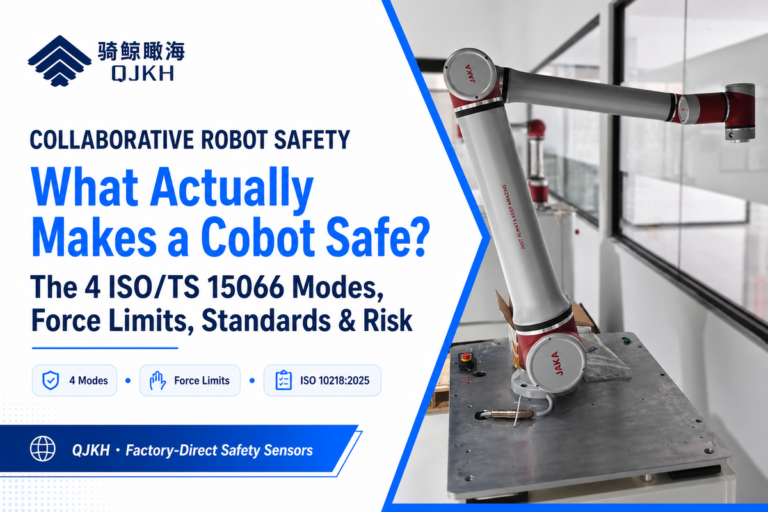
Updated June 2026 · Reviewed by the CCH Sensing technical team. Collaborative robot safety is the set of design limits, collaborative operating modes, and risk controls that let a robot share a workspace with people without injuring them. It’s also…
Light Curtain Blanking Explained: Types, Setup, and the Safe-Distance Catch
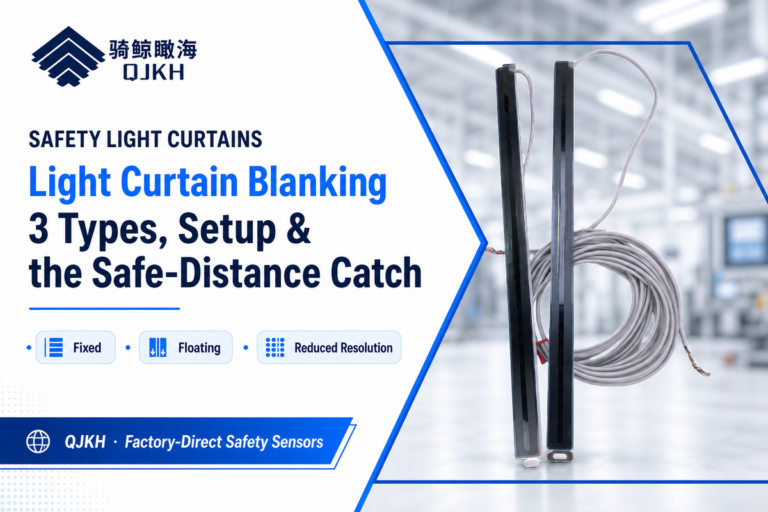
Updated June 2026 · Reviewed by the QJKH technical team Light curtain blanking is the function that let you tell a safety light curtain to ignore part of its protective field so a fixture, conveyor, or workpiece can sit in…
LiDAR vs Radar for Industrial Obstacle Detection
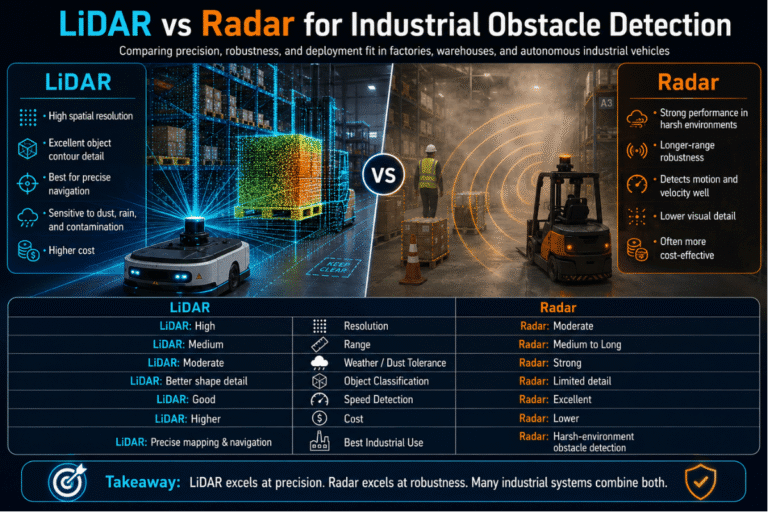
LiDAR vs radar is, at its core, one engineering trade-off: LiDAR resolves shape via a dense 3D point cloud, while radar resolves speed and pushes through fog. For an industrial machine detection problem – an AGV crossing a load dock,…
How to Wire a Safety Relay: Dual-Channel Wiring Diagram
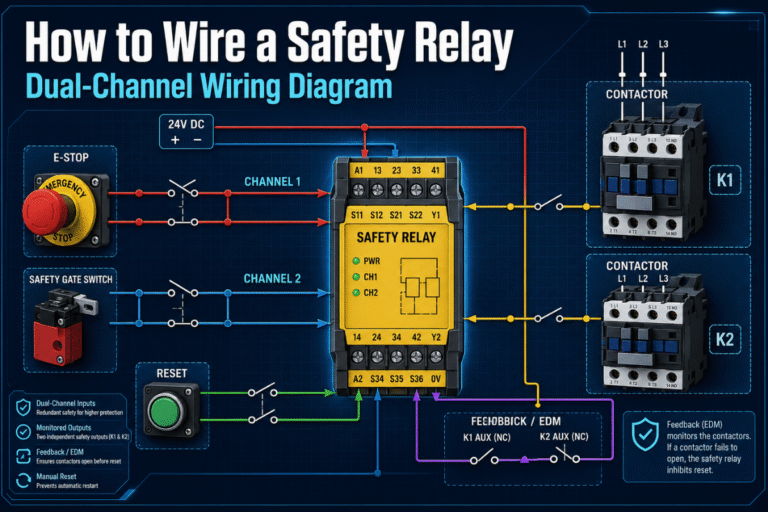
Knowing how to wire a safety relay is mostly a matter of four terminal groups, power, inputs, reset, and outputs, landed so the device monitor your safety input and drops the machine to a safe state on any fault. In…
Safety Laser Scanner vs Light Curtain: How to Choose
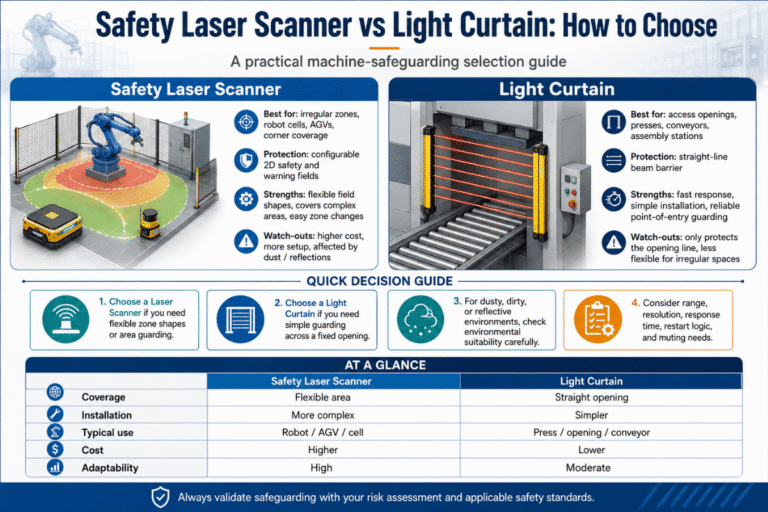
Safety laser scanner vs light curtain is the machine-guarding choice between area sensing and point-of-operation sensing, and it comes down to one practical question an operator faces at the press, robot cell, or floor: do you need fast, high-resolution finger…
Safety Relay vs Standard Relay: Force-Guided Contacts Explained
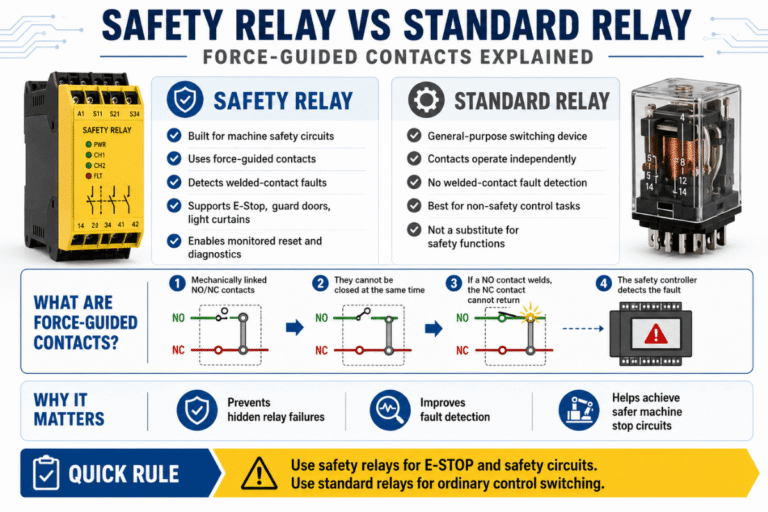
Updated Jun 2026 Reviewed by CCH Sensing Technical Team Safety relay vs standard relay is, at its core, a question about failure, not a spec exercise. Standard relays just switch circuits. Safety relays add redundancy, self-monitoring, and force-guided contacts so…
Emergency Stop Safety Relay: E-Stop Circuit Design
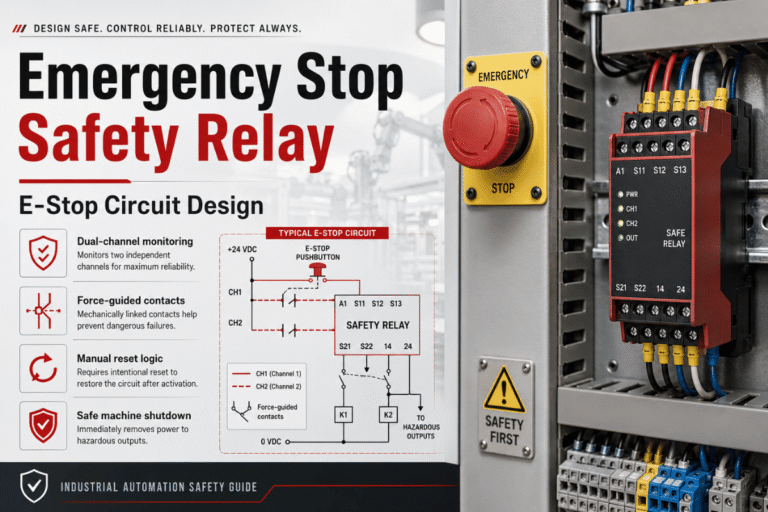
An emergency stop safety relay is the monitoring device that sits between your E-stop button and the motor contactor, checking the stop circuit for faults before it ever lets the machine restart. Wire an E-stop straight to a contactor and…
Functional Safety Standards: IEC 61508, ISO 13849 & IEC 62061
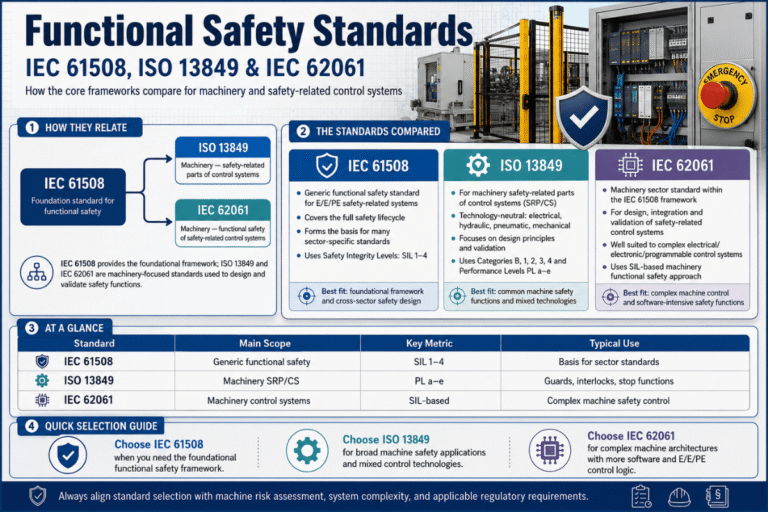
If you build or buy industrial machines, the functional safety standards you actually answer to are a small, specific set: IEC 61508 as the parent, and ISO 13849-1 and IEC 62061 as the two machinery-sector standards derived from it. This…
Safety Light Curtain Distance Calculation (ISO 13855 Guide)
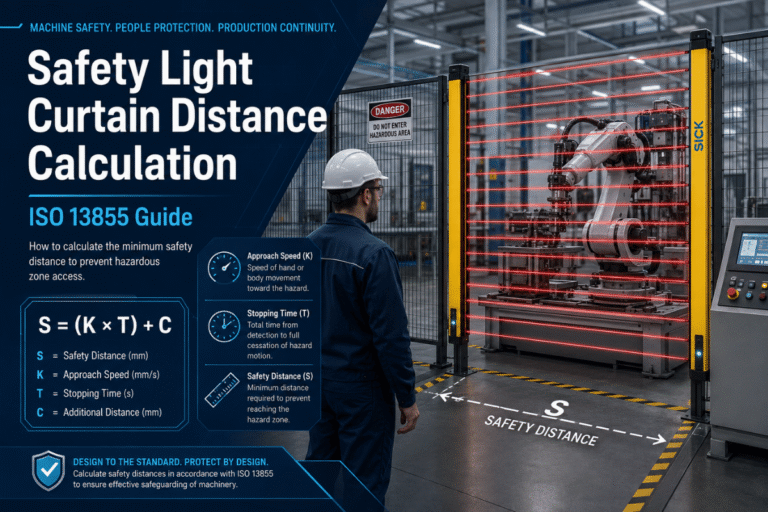
Safety light curtain distance calculation is the step that decides whether a guarded machine is actually safe or only looks safe. Mount the curtain too close to the hazard and a hand can reach the danger point before the machine…
ISO 13849 Performance Level (PL a-e) Explained for Machine Safety
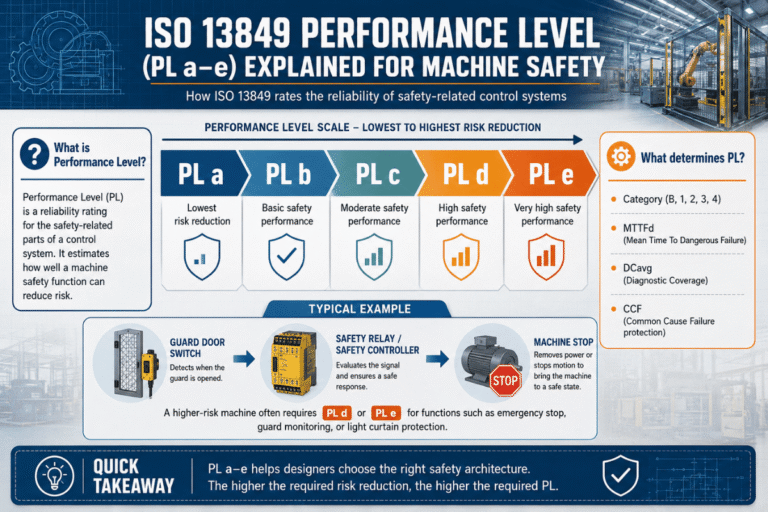
If you build or buy machinery for the European market, the ISO 13849 performance level is the number that decides whether a safety function is reliable enough to trust. Performance Level (PL a to PL e) under EN ISO 13849-1…
Trending now