Get in touch with QJKH Company


Quick Specs: Machine Guarding at a Glance
| Governing US standard | OSHA 29 CFR 1910.212 (general) + 1910.219 (power transmission) |
| Two families | Guards (physical barriers) · Devices (functional safeguards) |
| Four guard types | Fixed · Interlocked · Adjustable · Self-adjusting |
| Key device types | Presence-sensing (light curtain / laser scanner / mat) · Two-hand control · Pullback/restraint · Safety trip · Gate |
| Core selection driver | Hazard severity × access frequency |
| Presence-sensing standards | IEC 61496 (ESPE) · ISO 13855 (safe distance) |
Understanding the types of machine guards is the first decision every safety engineer, plant manager, and machine builder has to get right. The wrong guard doesn’t just fail an inspection, it gets removed, bypassed, or worked around, and moving machine parts cause some of the most severe injuries on the factory floor: crushed hands, amputations, and fatalities. Choosing the right type for your working environment is how you actually protect operators, not just pass an audit. This guide sorts the confusion.
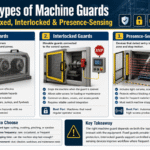
Types of machine guards fall into two primary OSHA families: guards and devices. Guards are physical barriers in four types, fixed, interlocked, adjustable, and self-adjusting. Devices are functional safeguards, including presence-sensing units, two-hand controls, pullback/restraint, and safety trips.
💡 Key Takeaways
- OSHA 1910.212 does not name a required guard type, it’s performance-based, so the employer chooses the method.
- The two primary engineered methods are guards (barriers) and devices (functional safeguards) — OSHA also recognizes awareness devices and safe work procedures.
- There are four guard types and six-plus device types — “how many” depends on whether you count devices.
- The best guard is the one that fit your access frequency, so it doesn’t get bypassed.
- Presence-sensing isn’t a universal replacement for a barrier: it won’t stop flying debris.
Machine Guards vs. Safeguarding Devices: The Two Families
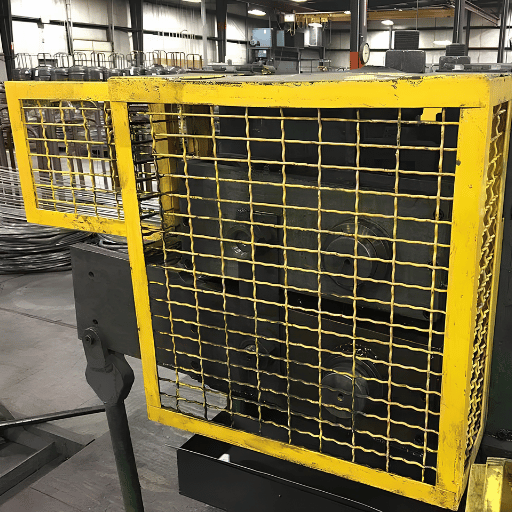
People search for the “types of machine guards” expecting a single list of four or five items, but the SERP serves up everything from four to six “types” with no agreement. The reason is that the source material, OSHA’s foundational publication Concepts and Techniques of Machine Safeguarding (OSHA 3067) — splits the engineered safeguards into two primary families, and most articles blur them together. (OSHA’s fuller framework in publication 3170 also lists awareness devices, safeguarding methods, and safe work procedures; guards and devices are the two primary engineered methods and the focus of this guide.)
Guards are physical barriers that enclose or block access to the danger area. Devices are functional safeguards that detect, restrain, or require a deliberate action rather than walling the hazard off. A light curtain isn’t a “guard” in the strict OSHA sense, it’s a presence-sensing device. Getting this distinction right is what separates a compliant safeguarding plan from a guessing game.
🌳 The 5-Branch Safeguarding Family Tree
A complete machine-guarding plan draws from five branches: four guard types plus the device family. Map every hazard to one branch before you buy anything.
| Family / Class | Safeguard Type | How it protects | Best when |
|---|---|---|---|
| Guards (barriers) | Fixed guard | Permanent enclosure | Rare or no operator access |
| Interlocked guard | Cuts power when opened | Frequent access for clearing/loading | |
| Adjustable guard | Operator-set opening | Varying stock sizes (saws) | |
| Self-adjusting guard | Moves with the stock | Through-feed cutting | |
| Devices (functional) | Presence-sensing — light curtain | Stops on beam break | Frequent reach-in, no barrier wanted |
| Presence-sensing — laser scanner | Maps a protective zone | Area/floor guarding, AGVs | |
| Presence-sensing — pressure mat | Stops on floor contact | Walk-in robot cells | |
| Two-hand control | Both hands occupy buttons | Single-operator presses | |
| Pullback / restraint | Tethers hands clear | Legacy presses, no other option | |
| Safety trip (bar/cable/rod) | Manual emergency stop on contact | Rollers, calenders, conveyors | |
| Interlocked gate | Controlled entry point | Perimeter-fenced cells | |
| Safeguarding by location/distance | Hazard placed out of reach | Elevated or remote hazards |
Source: OSHA 29 CFR 1910.212 and OSHA 3067, Concepts and Techniques of Machine Safeguarding.
The two-family split sit underneath everything that follows. It also explains why machine safeguarding is rarely one product, most real machines combine a fixed barrier on the power-transmission side with a device protecting the point of operation.
Fixed Guards
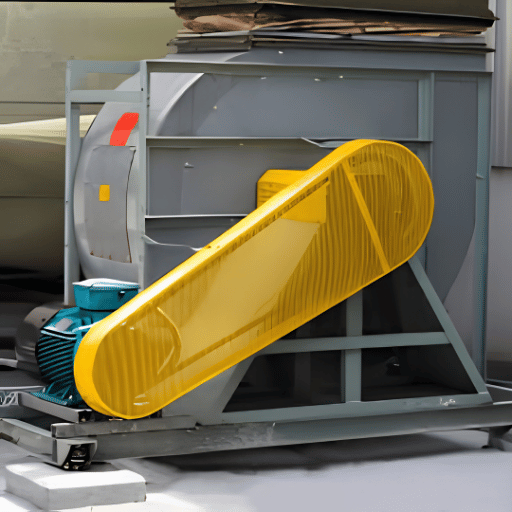
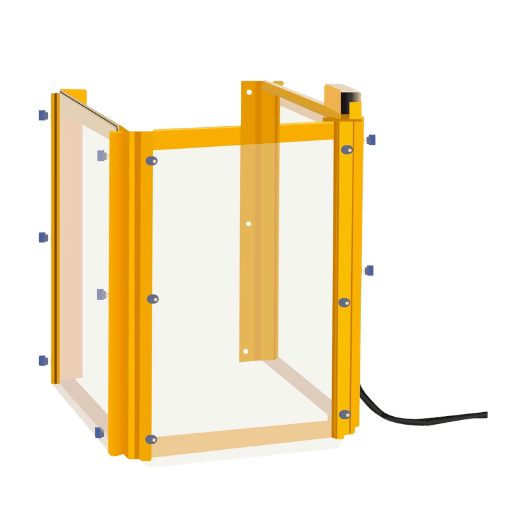
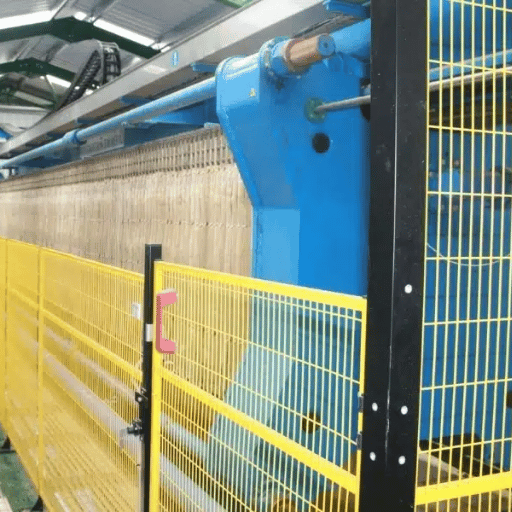
A fixed guard is a permanent physical barrier with no moving parts, bolted or welded over a hazard so it stays in place during operation. Because nothing can fail mechanically, fixed guards are often the most reliable barrier OSHA recognizes. There’s no interlock circuit, sensor, or spring to wear out, the steel or polycarbonate panel simply blocks contact. That reliability makes them the default for hazards a worker never needs to reach during a normal cycle: power-transmission covers over gears, pulleys, and belts, perimeter fencing around a cell, and enclosures over flying debris from a band saw or grinder.
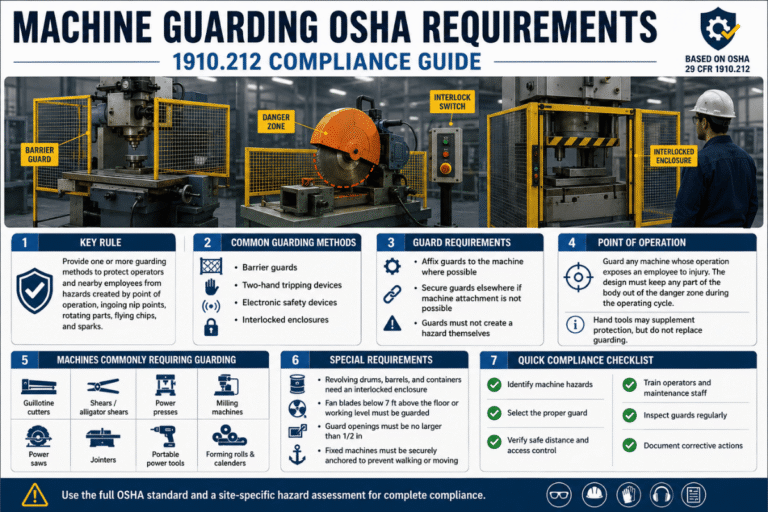
OSHA’s general duty here’s specific in places: under 1910.212(a)(5), fan blades less than seven feet above the floor must be guarded with openings no larger than one-half inch. Most fixed guards are fabricated from welded steel mesh, solid panels, or impact-resistant polycarbonate when operators need to see the process.
The catch is the one most “types of machine guards” articles skip. A fixed guard is only protective while it’s bolted on. On machines that need frequent access, clearing jams, changing tooling, loading stock, a fixed guard get removed and, too often, not reinstalled. A fixed barrier on a high-access point quietly converts into an unguarded machine. That isn’t a fixed-guard flaw; it’s a selection error, and it’s the reason the next two types exist.
Interlocked Guards
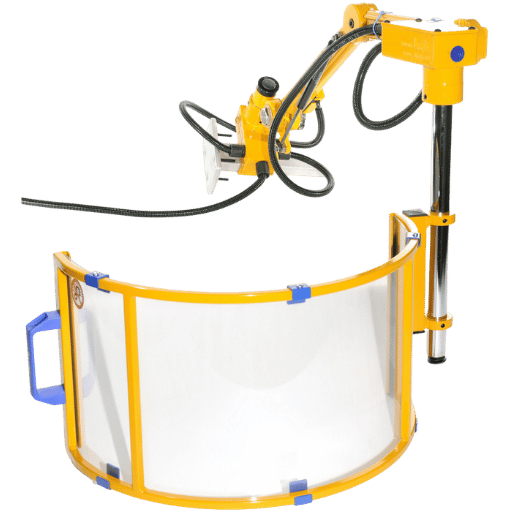
How Do Interlocked Machine Guards Work?
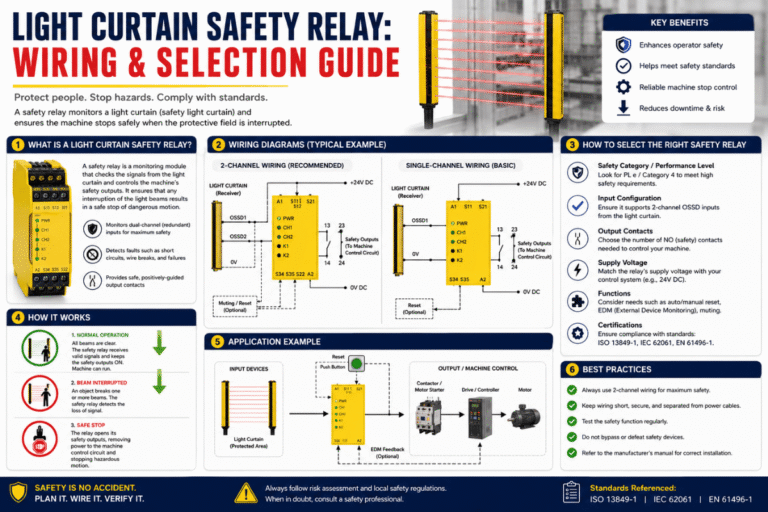
An interlocked guard is a movable barrier wired into the machine’s control or power circuit so the machine can’t run unless the guard is closed, and stops the moment it’s opened. A switch, tongue-actuated, magnetically coded, or RFID-coded, senses guard position and signals a safety relay to remove power. This is the answer to the fixed-guard problem: it gives operators legitimate, fast access for clearing and loading without ever exposing them to live motion.
OSHA even mandates interlocking outright in one case: under 1910.212(a)(4), revolving drums, barrels, and containers must be guarded by an enclosure interlocked with the drive so the drum cannot turn unless the guard is in place. The current design standard is ISO 14119:2024, which updated the older 2013 edition and explicitly addresses how to “minimize defeat in a reasonably foreseeable manner” — standards language for designing out the bypass. Interlock monitoring is typically handled by dedicated safety relay modules that check both channels for faults, rated to the required Performance Level, up to PL e under ISO 13849 or SIL 3 under IEC 62061 for high-risk motion.
Here’s the field reality, though. Interlocks are the most-defeated safeguard in the plant. Machinists openly report that finding CNC doors with the interlock bypassed is routine, justified as “necessary” for set-up or in-process adjustment. As one principle from the field put it: bypass is a symptom, not the disease, workers defeat an interlock when the guard design fights the way the job is actually done. An interlock that adds friction to a high-frequency task is an interlock that will be jumpered. The fix isn’t a sterner warning sign; it’s matching the safeguard to the access pattern in the first place.
Adjustable & Self-Adjusting Guards
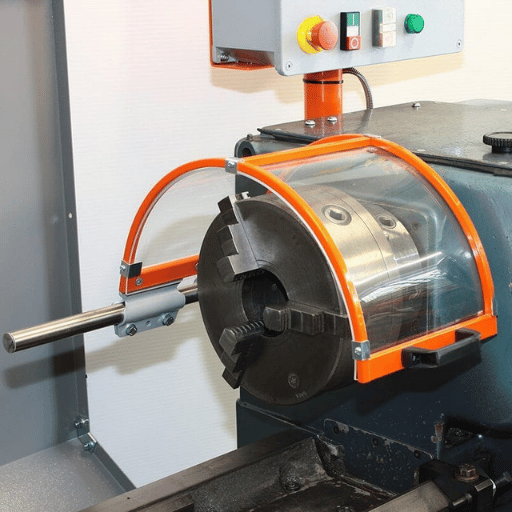
These two guard types solve a narrower problem: machines that feed material of changing size, where a fixed opening can’t fit every job. An adjustable guard has a barrier the operator manually repositions to suit the stock, the sliding shield on a drill press or band saw. A self-adjusting guard moves on its own as the material push through, then springs back to cover the blade when the cut ends; the spring-loaded guard on a table saw or jointer is the classic example.
Both trade some protection for flexibility, and OSHA’s own guidance is blunt about it: a self-adjusting guard “doesn’t always provide maximum protection” and can interfere with visibility. They earn their place on variable-stock machinery, but they aren’t a substitute for a fixed or interlocked barrier where the hazard is constant.
Source: OSHA Machine Guarding eTool – guard types and their limitations.
Presence-Sensing Devices: Light Curtains, Scanners & Mats
What Is a Presence-Sensing Device?
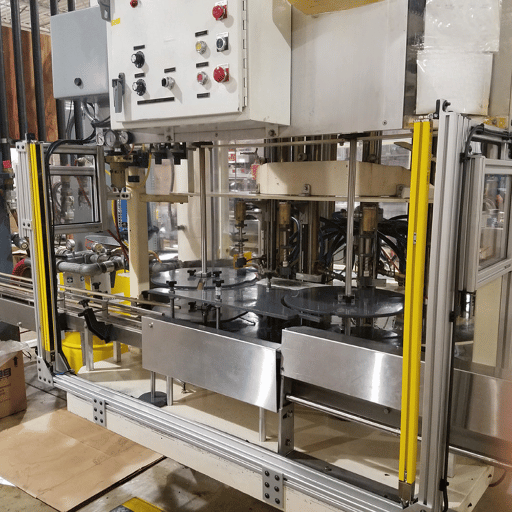
A presence-sensing device is a functional safeguard that detects a person entering the danger zone and sends a stop command, without any physical barrier. The three workhorses are the safety light curtain (an optical screen that trips when a beam is broken), the safety laser scanner (which maps a two-dimensional protective zone), and the pressure-sensitive mat (which trips on floor contact). Collectively these are electro-sensitive protective equipment, or ESPE, governed by IEC 61496.
Light-curtain resolution, the smallest object the screen reliably detects, is the selection driver: 14 mm models protect fingers, 30 mm protect hands, and 40 mm protect the body or limit access. Because a beam break only triggers a stop, the device must be mounted far enough back that the machine fully stops before a hand reaches the hazard. That minimum safety distance follows ISO 13855, which derives it from the operator’s approach speed toward the hazard and the machine’s total stopping time, a figure that folds in a typical light-curtain response time of 10–30 ms. A practical first pass is our ISO 13855 safety distance calculator.
Presence-sensing is the fastest-growing branch of the family, market analysts project presence-sensing sensors to hold roughly a third of the machine-safety product segment in 2026, driven by collaborative robots and high-throughput cells that can’t tolerate a fixed cage. As a manufacturer of Type 4, SIL 3 ENT light curtains and SH-series safety laser scanners, we see the pull most strongly in robotic cells where operators load parts dozens of times an hour.
⚠️ Important
A presence-sensing device stops a machine when something enters the field — but it puts up no wall. It will not contain flying debris, ejected parts, or coolant spray, and in some geometries it cannot stop an operator from reaching over or through the field. For impact or ejection hazards, a physical barrier is still required. See how the two compare in light curtain machine guarding applications, and how resolution drives finger and hand protection.
Other Safeguarding Devices: Two-Hand, Pullback, Trip & Gates
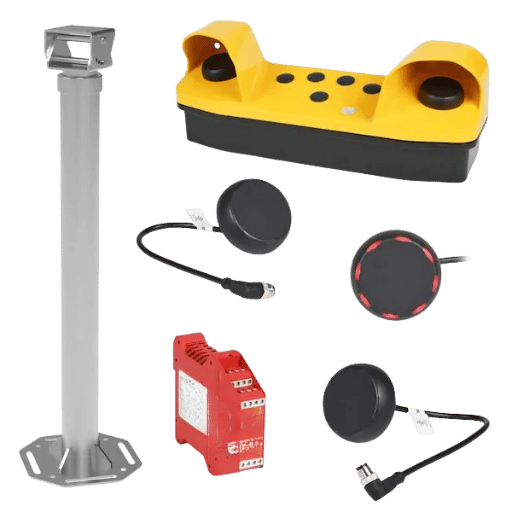
The device family run wider than presence-sensing. A two-hand control requires the operator to hold two buttons simultaneously, keeping both hands clear of the point of operation during the hazardous stroke, common on stamping presses. Pullback and restraint devices physically tether the operator’s hands away from the danger zone; they’re a last resort on legacy presses where nothing better can be fitted. A safety trip – a bar, cable, or rod, lets a worker stop the machine instantly on contact, the standard protection on rollers, calenders, and conveyors. And an interlocked gate turns a perimeter fence into a controlled entry point for robotic work cells. None of these replace a barrier where one is feasible; they cover the cases a barrier can’t.
Source: OSHA 29 CFR 1910.212(a)(1) – recognized safeguarding methods (two-hand tripping, electronic devices).
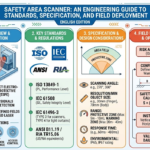
The Standards Behind Machine Guard Types
What Are the OSHA Requirements for Machine Guarding?
OSHA 1910.212 sets the general machine-guarding requirement: one or more methods of guarding must protect the operator from hazards such as the point of operation, ingoing nip points, rotating parts, and flying chips. It is performance-based, mandating an effective result rather than a specific guard type, so the employer chooses the method.
Machine guard safety in the U.S. starts here. The standard names barrier guards, two-hand tripping devices, and electronic safety devices only as examples; the liability for choosing well rests with the employer.
Around that core sit the design standards that tell you how each type should be built:
- ✔OSHA 1910.219 – guarding of mechanical power-transmission apparatus (shafts, pulleys, belts).
- ✔ANSI B11.19-2019 – performance requirements for safeguarding and risk-reduction measures (US).
- ✔ISO 14120:2015 (fixed and movable guards) and ISO 14119:2024 (interlocking devices).
- ✔ISO 13857:2019 (safety distances to prevent reaching) and ISO 13855 (positioning of safeguards by approach speed).
- ✔IEC 61496 (ESPE / light curtains) and CSA Z432 (Canada).
The standard that quietly decides whether a barrier actually protects anyone is the one on openings. A guard with a gap big enough to reach through is not a guard. Machine guards must keep openings small enough that a finger or hand cannot reach the moving part. The principle, codified in OSHA Table O-10 and ISO 13857, is that the closer an opening sits to the hazard, the smaller it must be.
| Distance of opening from hazard | Maximum opening width |
|---|---|
| 1/2 to 1-1/2 in | 1/4 in |
| 1-1/2 to 2-1/2 in | 3/8 in |
| 2-1/2 to 3-1/2 in | 1/2 in |
| 3-1/2 to 5-1/2 in | 5/8 in |
| 6-1/2 to 7-1/2 in | 7/8 in |
| 12-1/2 to 15-1/2 in | 1-1/2 in |
| 17-1/2 to 31-1/2 in | 2-1/8 in |
Representative values from OSHA Table O-10 (29 CFR 1910.217); always verify against the current published table for your machine. ISO 13857:2019 gives the international equivalents, but its reach values assume users aged 14+ at the 95th percentile and do not cover climbing-over or small-child access. Separately, OSHA 1910.212(a)(5) caps fan-blade guard openings at 1/2 inch when the blade is less than 7 ft above the floor.
📐 Engineering Note: the “gotcha stick” test
Safety inspectors carry a jointed reach rod, the “OSHA gotcha stick” — to probe whether fingers or a hand can get through a guard opening to a moving part. If the rod reaches the hazard, the guard fails, regardless of how solid it looks. Run the gap table above before an inspector runs the stick.
Source: ISO 13855 and OSHA 1910.219.
How to Choose the Right Guard Type for Your Hazard
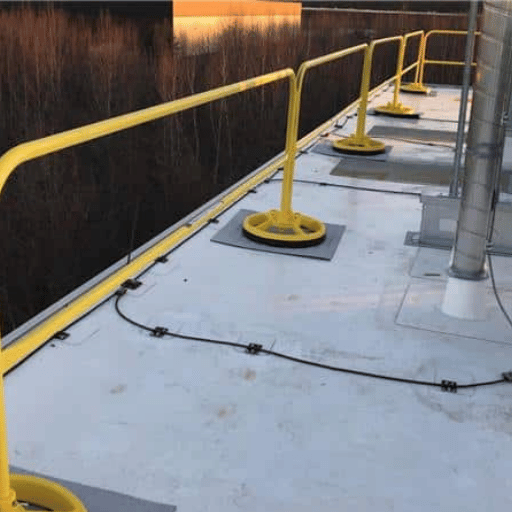
With four guard types and a half-dozen devices on the table, selection comes down to two variables: how severe the hazard is, and how often someone needs to get to it. Severity sets the floor on protection; access frequency decides whether a barrier will survive contact with reality or get defeated. The matrix below is the starting point we use.
Hazard-to-Guard Matrix: 4 Access Levels × 2 Severity Tiers
| Access frequency | Low-severity hazard | High-severity hazard (amputation/crush) |
|---|---|---|
| Never / rare | Fixed guard | Fixed guard + perimeter fence |
| Occasional (set-up, clearing) | Interlocked guard | Interlocked guard + safety relay monitoring |
| Frequent (every cycle) | Adjustable / self-adjusting guard | Presence-sensing (light curtain) + two-hand control |
| Area / walk-in (robot cell) | Interlocked gate | Laser scanner zone + interlocked gate |
That matrix encodes a simple ordering principle we call the Guard-Then-Sense Order: start with the most contained barrier the task can tolerate, and only step outward when access frequency forces it. If a fixed guard would be removed daily, move to an interlocked guard; if an interlocked guard would be opened every cycle, move to a presence-sensing device; if even that adds friction, add administrative controls. Aim for the safeguard that will still be in place a year from now, not the strongest one on paper.
“The guard that gets defeated is almost never too weak, it is the wrong type for how often the operator has to get in. We size the safeguard to the access pattern first, then to the hazard. A light curtain an operator can work with beats a bolted panel that ends up on the floor.”
Most selection mistakes follow directly from ignoring access frequency: bolting a fixed guard onto a high-access point (it gets removed), specifying a presence-sensing device where ejected debris demands a barrier, and skipping the formal risk assessment that would have surfaced both. Run the numbers on a safeguarding upgrade with our machine guarding ROI calculator.
Industry Outlook: Where Machine Safeguarding Is Heading
Machine-safety spending is growing steadily, analysts put the market near USD 5.6–6.4 billion in 2025, rising to about USD 7.5 billion by 2030 at a mid-single-digit CAGR near 5.7%. That growth isn’t evenly spread. Its clearest shift is away from fixed-only guarding toward sensing and monitored controls, as collaborative robots and high-throughput automation make a welded cage impractical. Presence-sensing sensors lead the segment, with some industry estimates putting their share near a third of machine-safety product revenue around 2026.
Patent filings point the same direction: recent grants cover light curtains forming dynamic exclusion zones around moving robots (US 11,209,570 B2), and light-curtain muting that adapts to product height (EP 3,133,423 A1) — both aimed at keeping people safe without stopping the line. Standards are following too: ISO 14119:2024 sharpened its language on designing out interlock defeat, the exact failure mode the shop floor has complained about for years. And machine guarding stayed in OSHA’s Top 10 most-cited general-industry standards in FY2025, so enforcement pressure is not easing.
If you’re planning a 2026 line, the practical takeaway is to budget for sensing on high-access points from the start rather than retrofitting after the first bypass complaint, and to keep the physical barrier where debris or ejection still demands one.
Source: OSHA Top 10 Most-Cited Standards (FY2025).
Frequently Asked Questions
How many types of machine guards are there?
View Answer
It depends on how you count. OSHA recognizes four types of physical guards — fixed, interlocked, adjustable, and self-adjusting — plus a separate family of safeguarding devices, including presence-sensing units, two-hand controls, pullback and restraint devices, and safety trips. Counting guards only gives four; counting guards and devices together is where the common “five” or “six types” figures come from. What matters is not the headline number but matching each hazard to the right guard or device.
What are the four general types of guards?
View Answer
The four general types of guards are fixed (a permanent barrier), interlocked (cuts power when opened), adjustable (an operator-set opening for varying stock), and self-adjusting (moves with the material, then springs back). All four are physical barriers, distinct from safeguarding devices such as presence-sensing units and two-hand controls, a separate OSHA category.
What is the difference between a machine guard and a safeguarding device?
View Answer
A guard is a physical barrier that blocks access to the hazard — a panel, fence, or enclosure. A device is a functional safeguard that detects, restrains, or requires a deliberate action instead of building a wall: a light curtain stops the machine on a beam break, a two-hand control occupies both hands. A light curtain is therefore a device, not a guard, even though people loosely call it “machine guarding.” The distinction decides the governing standard.
When should you use a presence-sensing device instead of a fixed guard?
View Answer
Choose presence-sensing when operators need frequent reach-in access and a barrier would be removed or bypassed — but only for contact hazards, not ejection. If the machine throws debris or coolant, keep the physical barrier — sensing for the first case, a barrier for the second.
What happens if an employer fails to comply with OSHA machine guarding standards?
View Answer
Machine guarding (1910.212) is consistently among OSHA’s most frequently cited general-industry standards, so non-compliance carries real exposure: citations, monetary penalties that escalate with severity and repeat findings, and the underlying injury risk itself — the U.S. Bureau of Labor Statistics records thousands of work-related amputations in private industry each year. Beyond fines, an unguarded machine creates direct civil liability when a worker is hurt, and willful or repeated violations draw the steepest penalties, often alongside a wider inspection.
When should a machine guard be inspected or replaced?
View Answer
Inspect guards on a regular schedule and replace any showing cracks, dents, bulges, or unauthorized holes. For interlocked guards and devices, also verify the switch or sensor still trips the stop function — functional testing, not just a visual check.
What materials are machine guards made from?
View Answer
Most fixed and perimeter guards use welded steel mesh or solid steel and aluminum panels for strength. Where operators need to watch the process, impact-resistant polycarbonate is preferred over glass because it resists shattering. Material choice follows the hazard: impact and ejection call for solid panels, while visibility favors polycarbonate.
Not sure which guard type fits your machine?
CCH Shanghai Sensing (QJKH) builds Type 4, SIL 3 safety light curtains, laser scanners, and safety relay modules, and ships factory-direct to 50+ countries. Tell us your hazard and access pattern, and our engineers will map it to the right safeguard.
Why We Wrote This Guide
We build presence-sensing safeguards, light curtains, laser scanners, and safety relays, so we see which guard choices survive on the floor and which get defeated. This guide reflects that vantage point and is anchored to OSHA 1910.212, OSHA 3067, and the ISO/ANSI design standards rather than to any product we sell. Reviewed by the CCH Shanghai Sensing technical team.
References & Sources
- 29 CFR 1910.212, General requirements for all machines – U.S. OSHA
- Machine Guarding eTool, Concepts and Techniques (OSHA 3067) – U.S. OSHA
- Machine Guarding, Overview – U.S. OSHA
- Top 10 Most Frequently Cited Standards – U.S. OSHA
- Injuries, Illnesses, and Fatalities (IIF) program – U.S. Bureau of Labor Statistics
- ISO 14119:2024, Interlocking devices associated with guards – ISO
- ISO 13855, Positioning of safeguards (approach speeds) – ISO
- ANSI B11.19-2019, Safeguarding and Machinery Risk Reduction – ANSI
Related Articles
- Type 2 vs Type 4 Safety Light Curtains – matching the device to risk level
- Safety Relay Modules Guide – monitoring interlocks and devices