Get in touch with QJKH Company

Industrial safety solutions are the layered systems — engineering controls, administrative procedures, and protective equipment — that protect workers from preventable harm. This guide defines the four categories, maps them to OSHA 1910 requirements, and gives you a framework for choosing what your facility actually needs.
Quick Specs: Industrial Safety Solutions
| Primary Regulation (US) | OSHA 29 CFR 1910 (general industry) |
| Supporting Standards | ANSI Z244.1, IEC 61496, ISO 13849-1 |
| Categories Covered | Engineering Controls · Administrative Controls · PPE · Emergency Procedures |
| 2025 OSHA Penalty Range | $16,550 (serious) to $165,514 (willful/repeated) |
| Intended Reader | Plant managers, safety engineers, EHS coordinators |
What Are Industrial Safety Solutions? Definition, Scope, and Purpose

Workplace safety measures fall into four categories: those that replace or isolate the hazard (engineering controls); those that design work practices (administrative controls); those that protect the worker through barrier clothing and equipment (Personal Protective Equipment); and those that govern response when prevention fails (emergency procedures). This guide walks through each category, maps them to OSHA 1910 rules, and provides a framework for managing your safety investments.
Scope matters here. “Industrial safety” is not a single product category — it is a layered system. A single press-brake operator is protected by a physical guard (engineering), a written operating procedure (administrative), cut-resistant gloves (PPE), and a site evacuation plan (emergency response). Remove any one layer and residual risk rises sharply.
Safety solutions serve two purposes: protect staff from injury and shield the business from the operational and financial impact of an incident. In 2024, BLS recorded 5,070 fatal occupational injuries and 2.5 million nonfatal cases in private industry — figures that translate into lost production, higher insurance premiums, and OSHA citations starting at $16,550 per serious violation as of January 2025.
The 4 Categories of Industrial Safety Solutions
To work out what belongs in a safety program, start at the NIOSH Hierarchy of Controls. NIOSH groups hazard-mitigation strategies into five effectiveness levels, and the four categories below regroup those levels into practical buckets that a purchasing or EHS team can actually buy, write, or teach.
📐 Engineering Note: NIOSH Effectiveness Ranking
The Hierarchy states that elimination (Level 1), substitution (Level 2), and engineering controls (Level 3) are more effective than administrative controls and PPE because the first three “control exposures without significant human interaction.” In plain terms: an interlocked physical guard prevents injury more reliably than a training reminder, even from the same trainer.
Engineering Controls — Physical Hazard Elimination
Engineering controls eliminate the hazard or isolate the worker from it. This category covers fixed and interlocked machine guards, proximity-sensing devices such as laser scanners and light curtains, local exhaust ventilation, and process enclosures including sound-proofing and machine housings. For the product-level breakdown by IEC 61496 Type classification, see our industrial machine safety solutions overview.
Administrative Controls — Policies, Training, Signage
Administrative controls reduce exposure to the hazard in terms of duration, frequency, or severity. They include written lockout/tagout (LOTO) procedures, job hazard analyses, mandatory breaks, hazard signage, confined-space entry permits, and documented training courses. The most common administrative control, by a wide margin, is regular worker training — and also the most commonly degraded when refresher sessions get skipped.
Personal Protective Equipment (PPE)
PPE is the last line of defense: safety helmets, eye and face shields, hearing protectors, respiratory gear, cut-resistant gloves, arc-rated apparel, and fall-arrest harnesses. NIOSH ranks PPE as the least effective control because it depends entirely on correct selection, wear, and maintenance by each worker. A hazard that could be eliminated by an engineering control should not be managed by PPE alone.
Emergency and Response Procedures
Emergency procedures include lockout/tagout (LOTO) for energy control during maintenance, confined-space entry and rescue, chemical spill response, fire evacuation, and GHS hazard communication. These come into play when prevention fails or when non-routine work exposes personnel to hazards outside the normal operating envelope.
| Category | Effectiveness | Worker Effort Required | Typical Standard |
|---|---|---|---|
| Engineering Controls | Highest — passive protection | None during operation | OSHA 1910.212, IEC 61496 |
| Administrative Controls | Moderate — depends on compliance | Training + procedure adherence | OSHA 1910.147, ANSI Z244.1 |
| PPE | Lowest — defense of last resort | Continuous wear + maintenance | OSHA 1910.132-138 |
| Emergency Procedures | Variable — incident-dependent | Drills + documented response | OSHA 1910.146, 1910.1200 |
Machine-Guarding Solutions: The Highest-Risk Category
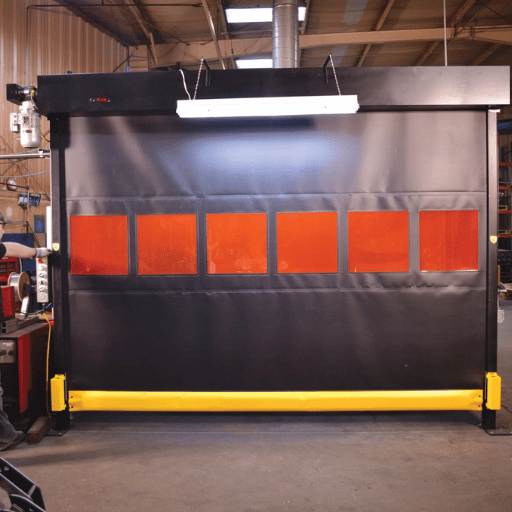
Among the four categories, machine guarding deserves its own section because it addresses the hazards most likely to cause amputations, crush injuries, and fatal entanglement. OSHA 29 CFR 1910.212 — the general-requirements standard — ranks in the agency’s Top 10 most-cited violations and appeared at #10 on the FY2024 list.
📐 Engineering Note: Performance Levels
Functional safety standard ISO 13849-1 classifies guard systems by Performance Level, or PL, on a scale of PL b (lowest) through PL e (highest). A Type 4 safety light curtain under the IEC 61496 classification meets PL e / SIL CL 3 — the highest integrity rating for machine safeguarding. Lower-risk applications such as PL c or PL d can be served by fixed or interlocked guards without electronic sensing.
| Guard Type | Typical Use | Performance Ceiling |
|---|---|---|
| Fixed guards | Permanent enclosures, rare access | Up to PL e (mechanical) |
| Interlocked movable guards | Access for part change or cleaning | PL d-e depending on switch type |
| Safety light curtains (ESPE Type 2 / 4) | Frequent manual access, high throughput | Type 4 = PL e / SIL CL 3 |
| Safety laser scanners | Perimeter guarding, AGV zones | PL d (most models) |
| Adjustable / self-adjusting guards | Bandsaws, abrasive wheels | PL c-d (mechanical) |
Deciding between these systems is rarely a pure performance question — throughput, cycle time, operator access frequency, and total cost of ownership all influence the choice. For facilities debating Type 2 versus Type 4, our detailed breakdown of Type 2 vs Type 4 safety light curtain selection walks through the Performance Level mapping and price bands. The CCH Type 4 safety light curtain product lineup covers resolution tiers from 14 mm (finger) to 50 mm (body) with IP65 and IP67 housings.
OSHA 1910 Requirements: What Your Safety Solutions Must Meet

In the United States, industrial safety measures are anchored to OSHA 29 CFR 1910 for general industry and 29 CFR 1926 for construction. The subparts below cover the hazards most facilities will encounter — each one carries its own prescriptive requirements, training obligations, and citation exposure.
| OSHA Subpart | Topic | Applies To |
|---|---|---|
| 1910.212 | General machine-guarding requirements | Any machine with point-of-operation hazard |
| 1910.147 | Lockout/Tagout — control of hazardous energy | Maintenance, servicing, setup |
| 1910.132 – 138 | Personal protective equipment | Head, eye, respiratory, hand, foot |
| 1910.1200 | Hazard Communication (HazCom / GHS) | Any facility handling hazardous chemicals |
| 1910.146 | Permit-required confined spaces | Tanks, vessels, pits, silos |
⚠️ 2025 OSHA Penalty Amounts
As of January 15, 2025, the maximum civil penalty for a serious or other-than-serious OSHA violation is $16,550 per violation. For a willful or repeated violation, the cap is $165,514 per violation. Under OSHA’s instance-by-instance citation policy, a single unguarded machine can generate multiple citations if multiple workers are exposed.
Enforcement is not hypothetical. OSHA issued tens of thousands of citations during FY2024 (October 1, 2023 through September 30, 2024) under these subparts, with Lockout/Tagout at #3 and Machine Guarding at #10 on the Top 10 Most Frequently Cited Standards.
10 Workplace Safety Rules Your Solutions Must Enforce
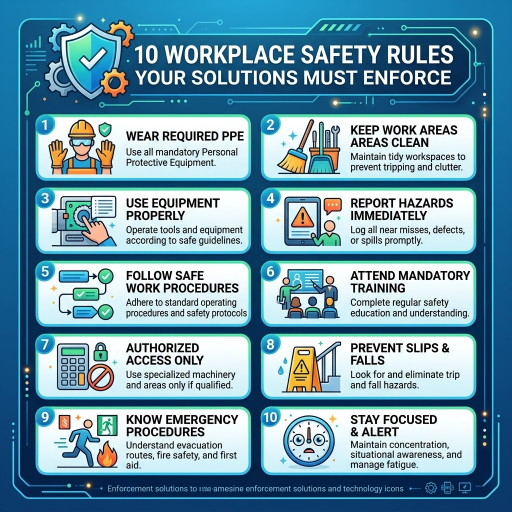
These ten rules map directly to the hazards OSHA cites most frequently. They are not philosophical tenets — each one is a specific, auditable practice with a regulatory anchor. A safety program that enforces all ten will close the majority of real-world citation exposure.
- Conduct a documented hazard assessment before work begins (OSHA 1910.132(d)(1)). Where this breaks down: assessments copied from a template without walking the actual cell.
- Guard every point of operation on every machine (OSHA 1910.212). Common failure: guards removed for maintenance and never replaced.
- Lock out and tag out all energy sources before servicing — OSHA 1910.147, ranked #3 in OSHA’s FY2024 Top 10. Typical gap: “quick fixes” performed under residual energy before full dissipation.
- Provide fall protection anywhere a worker can fall 4 feet or more (OSHA 1910.28 / 1926.501 — #1 cited standard in FY2024). Frequent lapse: harnesses unused because anchor points are inconvenient.
- Label and maintain SDSs for every hazardous chemical on site (OSHA 1910.1200 — #2 cited FY2024). Typical oversight: SDS binders outdated after supplier reformulation.
- Train each worker in the specific hazards of their job — role-based, not generic. Common gap: one orientation video and no refreshers.
- Inspect PPE before each shift and replace damaged equipment immediately (OSHA 1910.132(e)). Where it fails: shared PPE issued without fit check.
- Control confined-space entry with a written permit system (OSHA 1910.146). Common failure: entry attendants pulled off post to “help inside.”
- Report and investigate every incident and near-miss — not a single regulatory line, but a requirement of any real safety program. Where this fails: reporting punished instead of incentivized, so nothing gets reported.
- Maintain machinery on a preventive schedule, not only when it breaks. Failed guards and worn interlocks precede most mechanical injuries.
Industry Applications: Manufacturing, Construction, Oil & Gas, Chemical
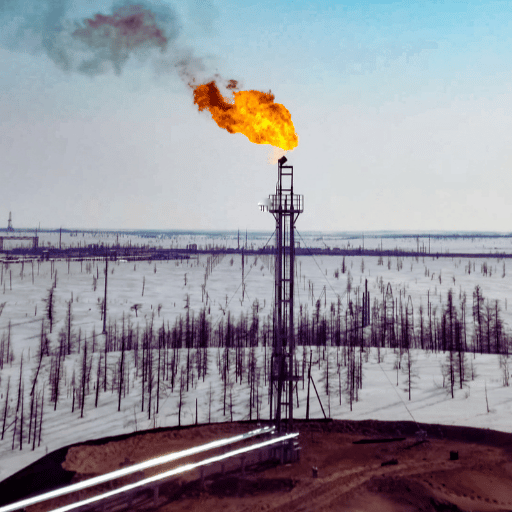
Sector-specific hazards require sector-specific safety controls. BLS recorded 5,070 fatal occupational injuries in 2024 — a 4% decrease from 2023 — but fatality concentration remains uneven across industries. Four sectors produce the majority of those cases.
Manufacturing
Dominant hazards: machine entanglement, crush, struck-by
Key solutions: Type 4 light curtains, interlocked guards, lockout/tagout, hearing protection, and operating-environment PPE. Standards: OSHA 1910.212, 1910.147, ANSI B11 series.
Construction
1,032 fatalities in 2024 — the highest fatality count of any BLS-tracked sector
Key solutions: fall arrest systems, scaffolding inspections, ladder safety, hard hats. Regulatory standards: OSHA 1926.501, 1926.451, 1926.1053.
Oil & Gas
Dominant hazards: explosive atmospheres, confined spaces, H₂S exposure
Key solutions: intrinsically safe gear, gas detection, permit-to-work system, confined-space rescue. Regulatory standards: OSHA 1910.146, API RP 54, NFPA 70 Art. 500.
Chemical Processing
Dominant hazards: toxic exposure, thermal/pressure release, reactive chemistry
Key solutions: process safety management (PSM), emergency shower / eyewash stations, respiratory protection, HazCom / GHS labeling. Standards: OSHA 1910.119, 1910.1200.
Industry-wide, the nonfatal injury rate for private industry fell to 2.3 cases per 100 full-time workers in 2024, down from 2.4 in 2023. That is slow, structural improvement — driven by better engineering controls and more consistent training, not by lighter regulation.
How to Select Industrial Safety Solutions (Decision Framework)
The framework below combines OSHA hazard-assessment criteria with NIOSH hierarchy guidance. Supplier evaluation criteria will vary by facility, so treat it as a scaffold rather than a rigid checklist — the goal is to match solution intensity to actual risk, not to over-engineer low-risk tasks.
| Hazard Severity | Access Frequency | Recommended Solution Tier |
|---|---|---|
| Fatality risk (amputation, crush) | High (multiple times per shift) | Type 4 light curtain + interlocked guard + LOTO |
| Fatality risk | Low (maintenance only) | Fixed guard + LOTO + permit system |
| Serious injury risk | High | Type 2 light curtain or adjustable guard + PPE |
| Minor injury risk | Variable | PPE + administrative controls + training |
📐 Engineering Note: Supplier Qualification
When sourcing engineering-control equipment, require third-party certification documents (TUV, UL, DGUV) with serial-matched certificate numbers — not just a marketing claim of “IEC 61496 compliant.” For high-risk applications (PL e / SIL CL 3), ask for the full Certificate of Conformity, the test report, and the manufacturer’s declaration of conformity. Our industrial safety solutions procurement guide includes the full supplier due-diligence checklist.
Frequently Asked Questions

Q: What’s the difference between industrial safety solutions and PPE?
View Answer
PPE is one category inside the broader set of industrial safety solutions. Solutions span engineering controls (guards, light curtains, ventilation), administrative controls (procedures and training), emergency response, and PPE. NIOSH ranks PPE as the least effective line of defense because it depends entirely on correct wear and maintenance by each worker.
Q: Are industrial safety solutions required by law in the United States?
View Answer
Yes. OSHA 29 CFR 1910 mandates machine guarding, LOTO, PPE, HazCom, and confined-space controls for general industry. Non-compliance carries civil penalties up to $165,514 per willful violation as of January 2025.
Q: How often should industrial safety equipment be inspected?
View Answer
Inspection frequency depends on the equipment class. PPE must be inspected before each use (OSHA 1910.132(e)). LOTO procedures require periodic inspection at least annually (1910.147(c)(6)). Safety light curtains and interlocks should undergo daily function tests and a documented annual performance check. Emergency eyewash and shower units require weekly activation per ANSI Z358.1. Keep a dated inspection log for each — auditors will ask.
Q: Which industrial safety solutions are mandatory vs optional?
View Answer
Mandatory when the hazard is present: machine guards at any point of operation, LOTO for servicing, PPE where a hazard assessment identifies exposure, HazCom for hazardous chemicals, and confined-space permits for permit-required spaces. Optional solutions include presence-sensing upgrades (swapping fixed guards for light curtains to improve throughput), behavior-based safety programs, and third-party certifications beyond the OSHA minimum. Optional does not mean unimportant — presence-sensing upgrades often pay back through reduced cycle time even when not legally required.
Q: Can safety light curtains replace physical machine guards?
View Answer
In many applications yes — provided the light curtain carries the correct Type classification (usually Type 4 for high-risk point-of-operation work) and is installed at the ISO 13855 safety distance. For deeper guidance on when light curtains are the right alternative to physical guarding, see our machine-guarding product and compliance reference.
About This Analysis
This guide was prepared by our engineering and compliance team for manufacturers, construction operators, and EHS coordinators evaluating industrial safety solutions. The OSHA subpart references and 2025 penalty amounts cited above were verified against the OSHA regulatory text and January 2025 adjustment notice at the time of publication. The machine-guarding performance levels (PL e / SIL CL 3) reflect current IEC 61496 and ISO 13849-1 classifications as of April 2026.
References & Sources
- OSHA 29 CFR 1910 — Occupational Safety and Health Standards — U.S. Department of Labor
- OSHA 2025 Civil Penalty Adjustment — Occupational Safety and Health Administration
- Top 10 Most Frequently Cited Standards (FY2024) — OSHA
- Hierarchy of Controls — CDC / NIOSH
- Census of Fatal Occupational Injuries Summary, 2024 — U.S. Bureau of Labor Statistics
- Employer-Reported Workplace Injuries and Illnesses, 2023-2024 — U.S. Bureau of Labor Statistics
- 29 CFR 1910.147 — Control of Hazardous Energy (Lockout/Tagout) — OSHA
Related Articles
- Industrial Machine Safety Solutions — Complete Guarding Systems — pillar reference for machine-guarding product selection