Get in touch with QJKH Company

Quick Specs: Typical Compact Safety Laser Scanner Ranges
| Specification | Typical Range |
|---|---|
| Protection Zone | 2–5.5 m |
| Warning Zone | 15–20 m |
| Scanning Angle | 270°–275° |
| Min Detectable Object | 30–70 mm |
| Response Time | 60–120 ms |
| Safety Rating | Type 3, SIL 2, PLd/Cat 3 |
| Weight | 0.5–1.2 kg |
| Power Consumption | 5–24 W |
When you’re crunching the floor space in millimeters and your machine layouts don’t really allow for awkward guarding hardware, a compact safety laser scanner is that extra safety cushion you didn’t previously have. The global safety laser scanner market was valued at $469.8M in 2023, with a CAGR of just over 6% – and the fastest growing segment (model size in this case)—is compact scanners, with almost all of its expansion driven by AGV/AMR fleet deployments. Here is a step by step explanation how they function, what specs really impact your risk assessment, and where these slim machines are meant to go—and where they aren’t.
What Is a Compact Safety Laser Scanner and How Does It Work?
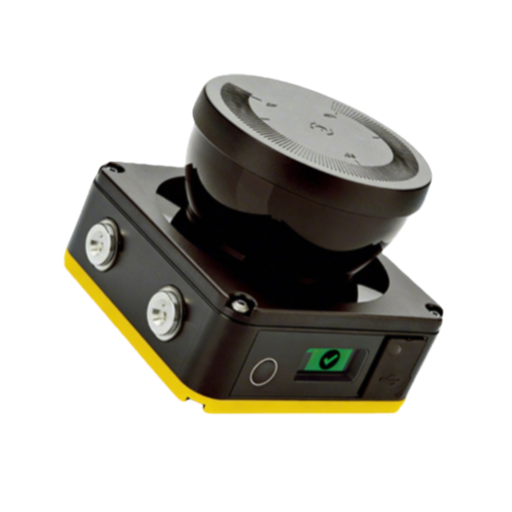
Type 3 Electro-Sensitive Protective Equipment (ESPE) device—a compact safety laser scanner—is a pulsed laser diode-based, sensitive to presence of objects in a three (specified as two) dimensional plane, according to the IEC 61496-3 classification standard. The device employs an 820-950 nm (infra-red) laser diode, detecting the presence of objects in the plane through diffuse reflection (as opposed to a specific laser-beam signature)—as any object returns 1.8% or more incident laser energy back to the receiver.
Operating principle is time-of-flight (ToF) triangulated against a rotating mirror. An electrically motor driven mirror within the scanner housing is in constant rotation, causing the laser beam to sweep about a horizontal arc of 270-275 . The scanner pulse each position and measures the time that the reflected signal takes to return.
Distance= (speed of light round-trip time)/2. The scanner compares the various distances to field boundaries programmed into the device and if any measurement is within the active protection zone then the safety outputs are de-energised within the rated response time
“Compact” here refers to the physical enclosure and mass – around 1.2kg maximum, dimensions around 80-100mm cube – not to any reduction in safety integrity. A compact safety laser scanner has to conform to the same IEC 61496 Type 3 requirements as a full size.
What Does a Compact Safety Laser Scanner Do?
Practically speaking, these devices perform three different task in the factory floor:
- Area protection – classifies a dangerous zone cordon which is appears around moving machine or device. when there is any object or person found inside this code, the device stop or its speed decreases to the secure state.
- Virtual protection Finahipp Vonimop – surveillance of the access to a dangerous zone. Unlike fixed protection, the programmable shape of the zone takes into account the openings/outputs/asynchronisms.
- Collision prevention- mounted on AGVs & AMRs. It detects obstacles in the path of the vehicle and triggers driver to apply brakes just before the collision occurs.
By itself, the small package segment generates roughly $84M of the aggregated safety scanner market and is growing at a faster rate than the traditional scanner sector, as a result of the AGV/AMR deployment wave in logistics, automotive assembly and semiconductor manufacturing. The physics behind this is simple: small vehicles have correspondingly small payload budgets, narrow aisles necessitate non protrusive sensors, and cobot cells are simply too small for 2 kg guarding hardware.
The maturity of safety laser scanners technology is impressive. However, the biggest change has been the preferred approach by engineers to integration. The common mistake can be seen time and again – they treat the scanner as an afterthought – an aftermachine layout has already been decided on. But the scanner should be designed in from the start, the field geometry, the response time, and the mounting position all influence the safety distance calculation, which then determines the positioning of the hazard zone boundary.
— Martin Kidman, Ph.D., TÜV Rheinland Certified Functional Safety Engineer, SICK UK
Key Technical Specifications to Evaluate
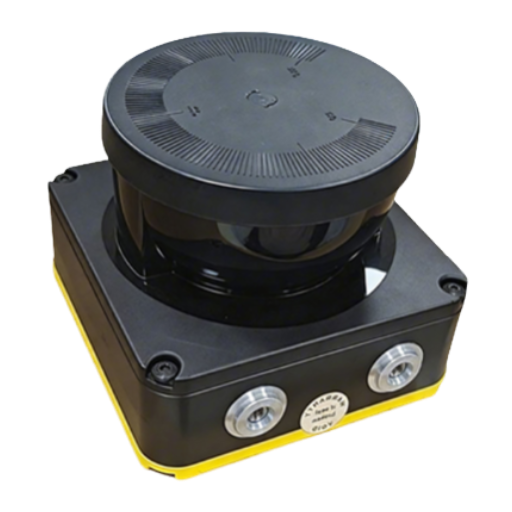
Datasheets for safety laser scanners list a dozen or more specs. Most engineers only compare the range and scanning angle and assume that’s good enough. But in reality, five specs govern the installation design, and two of them govern whether your safety distance calculation passes the application check.
Protection range is the maximum radius at which a specified minimum object diameter (usually 70 mm for body protection) will be detected. Beyond the protection range, small objects may slip past. Warning range can be a larger radius that activates the pre-warning e.g. slow your AGV before the protection zone triggers a full stop.
Scanning angle of 270 or 275 means a single scanner cannot give 360 coverage without overlap from a second unit. For AGV corner mounting, the 275 models impart an extra 5-overlap gain margin.
Minimum detectable object (MDO) is specified at maximum range for given conditions (1.8% minimum reflectance, specific ambient light). MDO generally degrades at the maximum limits of the protection range – a scanner rated for 70 mm detection may only consistently detect a 30 mm object when closer up.
Field sets (available through field set banks or switching input) determine the amount of pre-programmed zones that the scanner can switch between on-the-move. An AGV transitions between different speed zones in a single facility needs bank switching – 16 field sets ;but complex facilities may benefit from more (32 and even 70).
Response time arguably has the most significant design influence, and is directly governed by the safety distance equation.
📐 Engineering Note: ISO 13855 Safety Distance Formula
Using ISO 13855:2024 , the minimum safety distance S is calculated as follows:
S = (K × T) + C
Where K = approach speed (1,600 mm/s for whole body, 2,000 mm/s for hand/arm), T = total system response time (scanner + machine stop time), and C = additional distance derived from object penetration depth.
As a practical example: For hand approach speed (K = 2,000 mm/s), the interval of 60 ms for one vs. 120 ms for the other scanner sets a difference of 2,000 0.06 = 120 mm in minimum safety distance – prior to taking machine stop time into consideration. With a space-limited cobot cell, that 120 mm can be the difference between a viable installation and an installation that exceeds the available floor space and pushes the guarding out into the workspace.
Published specs for three popular compact scanner series are provided below:
| Specification | SICK nanoScan3 | Omron OS32C | Keyence SZ-V |
|---|---|---|---|
| Protection Range | 3 m | 4 m | 8.4 m |
| Warning Range | 20 m | 15 m | 26 m |
| Scanning Angle | 275° | 270° | 270° |
| Field Sets | 16 | 70 | 32 |
| Power Consumption | ~10 W | 5 W | ~15 W |
💡 Pro Tip
Response time. This value directly determines your minimum safe mounting distance. It is essential to always perform the calculation of safety distance prior to scanning solution selection – if the scanner is quick enough, it can be defined closer to the hazard, conserving valuable floor space.
The criterion that’s most frequently overlooked during the selection process is multiple sampling. The type 3 scanners are factory set to use 2x sampling for static applications, 4x for mobile, and 8x for dusty or dirty environments. Most probe authors report the addition of each sampling cycle increases the effective value of response time. As a probe note from SICK states: “If the multiple sampling is set too high then it may be possible for a person to pass through the protective field without being detected.” The reverse is also true – adjustment of the multiple sampling in a dusty environment produces false trips that upset production. Selecting the correct value for multiple sampling for deployment environment is critical.
Compact vs. Standard Safety Laser Scanners: When Size Matters
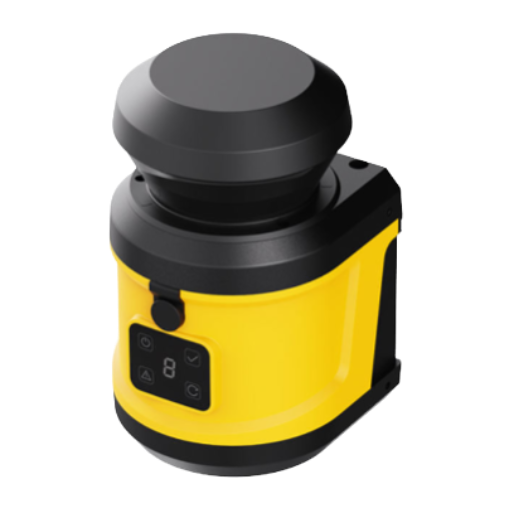
What separates a compact from a standard safety laser scanner is size and weight – not performance hierarchy. Both categories have the complete spectrum of IEC 61496 Type 3 certifications. A comparison of published specifications shows the distinction more reliably.
| Specification | Compact (nanoScan3) | Standard (S3000-class) |
|---|---|---|
| Protection Range | 3 m | 7 m |
| Warning Range | 20 m | 40 m |
| Scanning Angle | 275° | 270° |
| Dimensions (approx.) | 80 × 80 × 95 mm | 155 × 185 × 160 mm |
| Weight | ~0.5 kg | ~2.5 kg |
| Field Sets | 16 | 128 |
What Is the Range of a Safety Laser Scanner?
Compact units offer a protection distance of 2-5.5 m, with warning zones reaching 15-20 m; standard units protect up to 8.4 m or more (not specific for IKs, but in tests using the IEC 61496 specification). Protection distances are always tested under laboratory conditions that include a minimum of 10% reflectivity at specified ambient light levels. For real world conditions that include specular nature, high ambient light or airborne contamination, the measured range may be shorter.
A little-known technical insight from the safety integrator community is that a compact scanner with shorter protection range that its standard-sized competitor will often have better performance with dust or particulate matter. The reason is that the shortened protection range means it is easier to get the optical system simpler – and thereby have fewer variables that are affected by component drift. This results in a shorter response time, fewer nuisance trips, and better operational stability in the mid-dust conditions – even when not factoring in the weight and size advantages.
Having “compact = less safe” defined as in error. IEC 61496 Type 3 ensures performance standards are the same regardless of enclosure size. Of all scanners – compact or otherwise – that have undergone certification, it is guaranteed that both meet a minimum reflectance (each test includes the minimum specified) level, both exceed the response time test, and both have been proven to meet redunant component design criteria.
Decision framework:
- Mounting depth available < 150 mm → compact scanner
- Required protection range > 5 m → standard scanner
- AGV with payload or battery constraints is compact (weight budget matters)
- Fixed perimeter guarding with > 100 field set requirement standard scanner
For a general comparison across the family of safety laser scanners, view the complete range and published specification.
✔ Advantages of Compact Scanners
- Fits in space-constrained AGV and cobot cells
- Lower vehicle payload penalty (0.5–1.2 kg)
- Lower power draw — extends AGV battery life
- Faster response times on shorter-range models
- Identical Type 3 / PLd / SIL 2 certification
- Generally lower purchase price than standard scanners
⚠️ Limitations of Compact Scanners
- Protection range limited to 2–5.5 m (most models)
- Fewer field set banks (16–32 vs. 128+)
- Warning zone shorter than standard equivalents
- Indoor-only certification under IEC 61496-3
- May need 2 units for complete 360 coverage on large vehicles
Top Applications for Compact Safety Laser Scanners
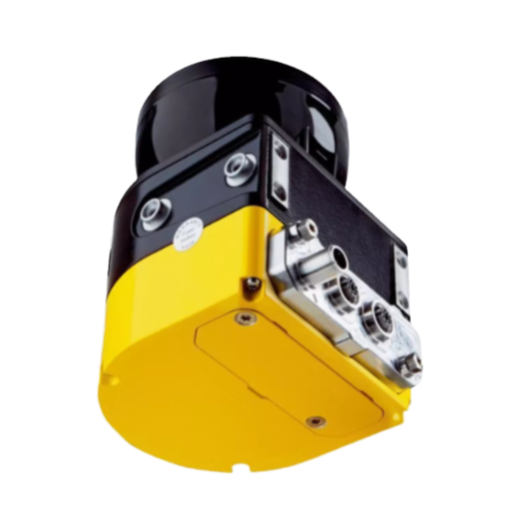
1. AGV/AMR Fleet Protection
The Mobile safety scanner segment was about $124.71Million in 2023 and is the primary catalyst for growth of compact models. AGVs and AMRs install compact scanners on diagonal corners – 2 units per vehicle – for a 360 degree horizontal view using the 275 scanning angle (190 overlap on each corner pair). Field set bank switching allows the vehicle to change its protective field configuration dynamically as its rate of travel, direction of travel, and zone changes. For safety laser scanner for AGV and AMR usages, the capabilities of low weight, small overall size, and field switching – make compact scanners the default. Many installations make use of the secondary output of the scanner for navigation reference—by checking lap position without the help of additional sensor hardware.
2. Collaborative Robot (Cobot) Cells
ISO 10218-2 permits fenceless robotics by operation when the safeguarding system is able to detect the presence of a human and reduce the robot’s speed.Field set bank switching, mounted on the floor along the perimeter of a cobot cell, produces a programmable 2D protection zone that accurately represents the true hazard footprint—not a rectangular fence approximation.Compact housing fits within the base-mounted brackets offered by most cobot OEMs, without increasing the cell floor space. A single compact scanner is adequate to secure most UR10/UR16 and FANUC CRX cobot cells within the 3-4m radius.
3. Packaging and Conveyor Line Guarding
Access protection challenge exists for packaging lines: products must go through the safeguarding boundary while operators are kept out.Compact scanners with muting sequences—where the protection zone only is suppressed temporarily by a passing product package—meet this without the need for physical barriers. If loading a homogenous pack through the opening solely is the muting objective, a muting Gisinug Anermahp is often cost-effective, and can be combined with the scanner to provide a non-rectangular muting zone; scanners are useful when the zone shape might need to be different from the pack shape or when flow direction might change from run to run.
4. Semiconductor and Cleanroom Environments
Cleanroom manufacturing operations require safety solutions that produce minimal airborne emissions, minimal heat, minimal vibration, and operate in high-lumen, low-noise lighting environments.Compact scanners—esp. those in the 5-10 W range—produce less heat and generate fewer vibration induced particles than electromechanical mass. The absence of mechanical parts promotes easy installation in confined inter-bay spaces.
Real-World Scenario: Warehouse AGV Fleet
Imagine a logistics building with 1.5 m wide picking aisles, three shifts, with 12 AGVs running between the picking stations. Each AGV will need two compact scanners mounted at diagonally opposed corners for 360 coverage. Only 2 units are needed for each vehicle with the 275 scanning angle – a third unit would just add payload and cost without increasing coverage. Four multiple sampling for mobile use plus the scanners will keep the cardboard dust generated by aggressive, fast high-throughput picking operations under 80 ms by maintaining an effective response time of less than 80 ms. With a 1.2 m/sec travel speed, effective 120 ms travel speed implies a 96 mm buffer prior to issuing stop command – which is well within the 3 m protective field at that speed. Using the narrow aisles in this facility, compact housing is critical: the scanner protrudes less than 40 mm from the AGV body, remaining within the known envelope of the defined system.
One common lament from certified functional safety engineers: field set switching logic must be as capable as the scanner. If the scanner is rated PLd/SIL 2, the inputs that set field toggles, such as speed signals, direction encoders, zone triggers, all need to be handled through a SIL 2-rated safety controller. It’s a known non-compliance path to use a regular PLC output to switch safety field sets.
For fixed position access protection where the zone shape is a simple opening rather than a easily programmable 2D shape, safety light curtains are the more cost effective, higher resolution choice.
Safety Standards and Compliance Requirements
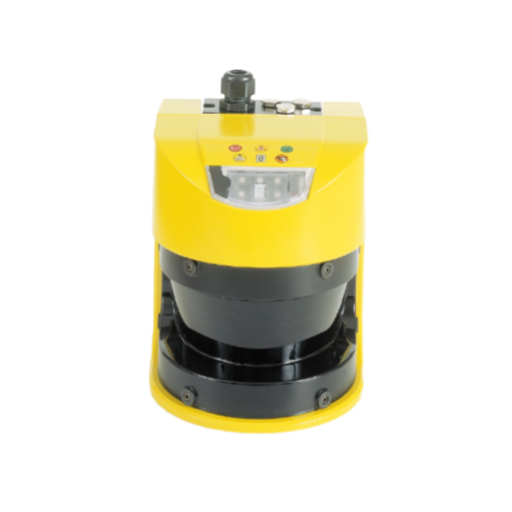
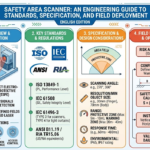
| Standard | Requirement | What It Means for Engineers |
|---|---|---|
| IEC 61496-3:2018 | Type 3 ESPE | Active opto-electronic protective device using diffuse reflection; minimum 1.8% reflectance detection; indoor use at 820–950 nm wavelength |
| IEC 61508:2010 | SIL 2 | Dangerous failure rate between 10⁻⁷ and 10⁻⁶ per hour; systematic capability SC 3 required |
| ISO 13849-1:2023 | PLd, Category 3 | Redundant safety channels; single-fault tolerant; well-tried components required; MTTFd high |
| ISO 13855:2024 | Safety distance | S = (K × T) + C; minimum 100 mm safety distance regardless of calculation result; approach speed constants defined by body part |
📐 Engineering Note: Category 3 Architecture
Category 3 per ISO 13849-1 ensures that just one failing component in the safety chain of components cannot cause loss of the safety function. This is implemented by every safety laser scanner certified to the standard through a redundant processing chain – two independent processors cross-vett each other to ensure their outputs match. Should one channel become discrepant, it goes to safe state (all outputs de-energized) regardless of what the other processor did. Similarly, safety output relays have dual channel monitoring. This architecture is absolutely mandatory for PLd compliance and is tested at type-test – not part of an attractive pack-and-put variant for a field.
⚠️ Important: Type 3 Is the Ceiling for Laser Scanners
IEC 61496 Type 3 is the maximum achievable ICAO according to IEC 61496 for laser scanner technology. If your hazard analysis finds that you are actually facing a PL e or SIL 3 category situation, laser scanners cannot be acceptable anywhere you are actually exposed – no matter who makes it or what model. In such a case, you need a Type 4 unit – most often a Type 4 safety light curtain. Confusing a Type 3 with a Type 4 in a hazard analysis is a frequent and costly mistake.
Standards that explicitly require IEC 61496 compliant safety devices to be used on mobile and robotic vehicles:
- ISO 3691-4 – Industrial trucks: driverless trucks and their systems. Demands ESPE safety devices that are IEC 61496 compliant.
- ANSI/RIA R15.08 – Industrial mobile robots: safety requirements for design, construction and commissioning. Makes reference to IEC 61496 to specify area sensing.
- ISO 10218-2 -Robot safety: industrial robot safety requirements, design and implementation. Describes the protective stop requirements a laser scanner shall meet when used for collaborative work.
✔ Compliance Checklist for Safety Laser Scanner Installation
- Risk assessment performed to ISO 12100 prior to scanner selection
- PL/SIL confirmation required – check that Type 3 is suitable (PLd max)
- safety distance formation according to ISO 13855 before fixing mounting position
- ✔ Multiple sampling configured for actual environment (2×/4×/8×)
- Field set switching inputs verified against required safety integrity level
- Validation tests performed to IEC 62061 or ISO 13849 after installation
- ✔ Annual functional safety validation scheduled per IEC 62061
- Sector-specific standard identified (ISO 3691-4, ANSI R15.08, ISO 10218-2)
Reviewed by CCH Shanghai engineering team – 20+ years industry experience in safety sensor design and manufacture
How to Select the Right Compact Safety Laser Scanner
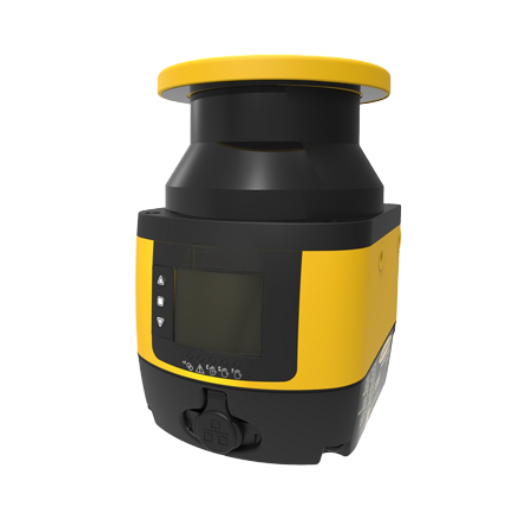
Scanner selection should be a logical process, not a comparison of datasheet specs. The logical framework below – the 3-3-3 Rule – provides a simple, logical starting framework that addresses three dimensions most engineers miss when selecting compact scanners.
The 3-3-3 Rule for Compact Safety Laser Scanner Selection
3 standards to qualify: IEC 61496 Type 3 (device type approval) IEC 61508 SIL 2 (functional safety) ISO 13849 PLd/Category 3 (safety architecture)
3 specs to compare first: protection range (must cover actual hazard zone) scanning angle (coverage per unit, influences number of units needed) response time (feeds directly into safety distance calculation)
3 app factors to confirm: mounting dimensions (compact versus standard) environment (IP rating, contamination, indoor/outdoor) connectivity (CIP Safety / PROFIsafe / EFI-pro etc match your safety PLC)
What Are the Disadvantages of Laser Scanners?
Honest answer: several, and they matter for application selection.
Environmental conditions matter more than any other factor. Airborne dust, fog and rain cause laser beam scattering that reduces effective range and increases false trip events. IEC 61496-3 standard is a indoor-only regulatory device (820-950 nm wavelength range selected partly to limit ingress of solar radiation). For outdoor or high-humidity applications, look for ISO 62998-certified scanners, or proprietary outdoor lenses, accounting for a very small proportion of the market.
Dither at range limits – minimum detectable object increases with MDO toward the limit of protection range. A scanner rated at 70 mm MDO at 3 m might reliably resolve only 30 mm objects at 1m. For fields that require small-diameter limb detection at maximum range, check MDO specifications out to actual standoff distance.
Cost at the level of alternatives – for straightforward single-plane access protection mounted in a fixed machine aperture, a Type 4 safety light curtain exhibits better resolution, higher PL, and lower cost than a scanner. Scanners are a cost-effective solution whenever zone shape flexibility, 2D area coverage or mobile mounting is your concern.
Response time versus multiple sampling compromise – as described, increased multiple sampling increases response time and thus the safety distance required. In applications that demand a genuinely 8-sample environment, the resulting response time may cause the safety distance specification to become too high, leading to challenges in installation.
✔ Scanner Selection Checklist
- Protection range encloses actual hazard zone at specified MDO (not just maximum specified value)
- response time integrated into ISO 13855 estimation – safety distance agreeable
- Field set quantity adequate for all modes and speed zones
- IP rating matches environment (IP65 minimum for very fine dusts, IP67 for washdown
- Safety network data protocol compatible with safety PLC (CIP Safety / PROFIsafe / proprietary)
- ✔ Power consumption within vehicle or panel budget
- Outdoor certification validated if any part of travel is outdoors
⚠️ Warning
Wrong field set choice can lead to AGV using a protection zone that is too small for the current travel speed – creating a trap that the scanner cannot see until it’s too late. Likewise, the field set switching logic has to be part of the safety function, not another parameter that the user can change down the line.
Our Perspective
CCH Shanghai Sensors and Intelligence Technology leverages 20+ years experience on industrial safety sensor R&D & manufacturing for this guide. Consolidating information from information sources is the nute. IEC/ISO standards (publicly available), technical datasheets (company verified), and experience of functional safety engineers (TV-certified) are the technical sources. Use published product datasheets for specific performance numbers. Actual performance depends on environment, installation, and mounting geometry. To be educational content only – this is no substitute for detailed safe operation risk assesments by qualified safety engineers.
Frequently Asked Questions
What does a compact safety laser scanner cost?
Development Tools $1,500-$5,000 PIPAL Byodbom, depending on protection range, number of field set banks and available network connectivity options. Low end units provide basic OSSD outputs and 16 field sets; higher end units provide 70+ field sets, CIP Safety or PROFIsafe, longer protection ranges. Compact models cost 15-30% less than full-sized Scanner units from the same manufacturer. Consider safety controller hardware, mounting hardware and worker commissioning time when estimating the total system cost.
Can I use a compact safety laser scanner outdoors?
Standards IEC 61496-3 are specified and certified for indoor operation at 820-950 nm, where the solar radiation flux through the optical filter can be excluded in the specified operating environment. If outdoor installations are required, then only scanners certified under IEC 62998 (these follow the same safety standards, but are tested specifically for outdoor operation) or a manufacturer’s approved outdoor certification will be valid along with an IP65 (or better), sunshielded enclosure and cold climate heaters. Outdoor certification is a low volume but expanding niche; ensure outdoor certification is published in the datasheet before installation.
How many scanners do I need for 360° coverage?
With a 275 scanning angle, two scanners mounted on diagonal corners give complete 360 view plus 190 of overlap – where both scanners simultaneously “see” the same detection zone. This is the industry safe standard for crosspathAGV installations. Three scanners would be required for vehicles with a 270 model in certain mounting configurations where blind spots cannot be avoided.
Safety laser scanner vs. safety light curtain — which do I need?
Scanners offer 2D area protection with programmable zone consert – needed for AGVs, complex shape detector-perimeters and multi-zone installations. Safety light curtains give single plane access protection at increased resolution with the optional Type 4/SIL 3 rated options which scanners cannot achieve. For a simple machine opening that requires personnel access alerting, the light curtain is generally more economical and better safe. Forarea protection, mobile platforms, and irregular zones shapes, scanners are usually the only practical solution. Consult the full course of safety light curtains for data comparisons.
Do compact safety laser scanners support safety network protocols?
Yes – All modern compact scanner models on the market today are capable of CIP Safety (Rockwell/Allen-Bradley) , PROFIsafe (Siemens TIA Portal programs), and manufacturer proprietary protocols (such as SICK EFI-pro). Safety networking allows remote diagnostics, wiring reduction (one cable replaces 3-4 pairs of OSSD’s), and safet PLC’s for field set switching. Make sure to confirm protocol compatibility with your safety controller before specifying – not all models will operate on all protocols.
How often do compact safety laser scanners need maintenance?
The main maintenance operation is lens cleaning – performed monthly in dusty environments (like handling of cardboard, working of metals), and quarterly in clean environment. safety laser scanners will automatically internally monitor for optical contamination, mirror motor voltage errors, and electronic errors where no calibration is recommended, performing IDRIS. The yearly Tan Black validation (functional validation – confirming response time, MDO, and OSSD output function) of TCES is suggested at IEC 62061, and documented in the machine technical file.
Ready to Specify Your Scanner?
Available published specifications or consult our engineering team for application specific advice.
References & Sources
- IEC 61496-3:2018 — International Electrotechnical Commission. standards.iteh.ai
- Tabcava – Machinery Safety: Safeguards Position relative to Approach Speed iso.org
- U.S. Department of Labor, OSHA Laser Hazards Standards – osha.gov
- Safety Laser Scanner Market Size & Share, Industry Analysis 2032 — Global Market Insights. gminsights.com
- An Introduction to the IEC 61496 Series — Analog Devices EngineerZone. ez.analog.com
- EN ISO 13855 Safety Distance Guide — Pilz. pilz.com
- Safety Distance Calculation Guide — Banner Engineering. info.bannerengineering.com (PDF)