
Get in touch with QJKH Company

Muting vs Blanking refers to two changes in a safety light curtain application that call for different responses on the test sheet. The first test case is what happens if a pallet stops partway through the opening. The second is what happens if a bracket in the light grid shifts out of position. The tests check different aspects of the safeguarding design.
Muting vs Blanking: Muting temporarily suspends a defined protective function under specified conditions. Blanking changes how a curtain evaluates certain beam interruptions. A partial mute can leave designated beams active, so record which beams should still detect an interruption.
What to put on the test sheet
- Which beams stay active in the configured mode.
- What happens if a load stalls, or if a fixture shifts or comes out.
- Which detection and stopping data are applicable after the change.
- How the machine remains in a specified safe state after a fault or access.
Which part of the protective function changes?
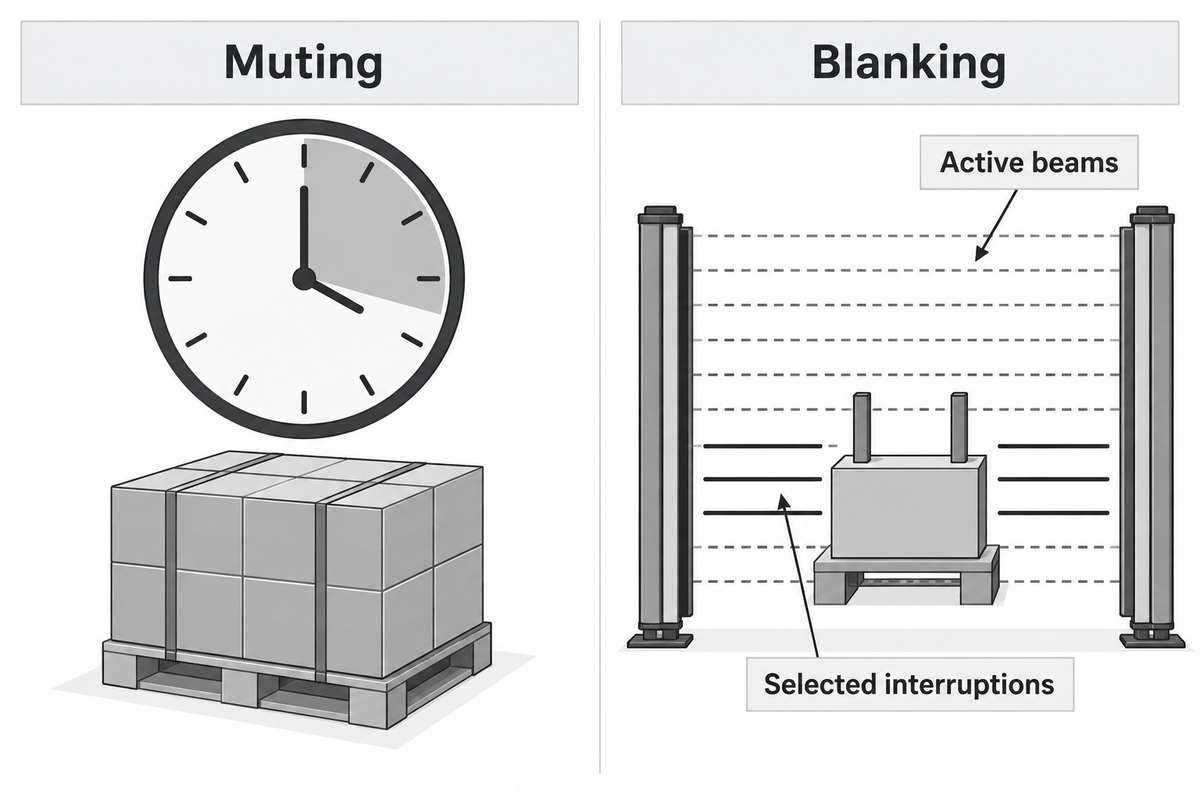
Muting changes when a protective function is temporarily suspended in the safety system. Blanking changes which beam interruptions are accepted by the curtain. This distinction is important if the machine continues to operate. The same observation can arise in two different control states, each with its own circumstances and expected response.
Visualize a conveyor moving a loaded pallet through the muted field at an opening. The muting function assesses relevant inputs against the defined transfer conditions before it allows muting. On a light curtain with muting, the acceptance check covers entry into the muted state and the return to protection at the end of the event. A fixed bracket in the beam field presents a different task. The detector evaluates the beam pattern, and the machine designer accounts for access around the bracket.
Certain devices for industrial safety support partial muting. The documented SICK deTec4 example kept defined beams active during a valid partial mute. An interruption of an active beam switches the curtain’s safety outputs off in that mode. The machine responds based on how those outputs are integrated. Active beams are marked on drawings.
Light curtain muting is the automatic suspension of a safety function during a defined part of material flow. The muting controller assesses the signals that initiate the muting cycle against the configured sequence logic. For muting safety, a muting signal requires more than “the conveyor is running.” The signal sequence and the point at which protection returns belong in the validation record.
Cross muting and sequential arrangements describe different ways to detect the material. Some documented architectures employ two sensors, while others employ four sensors. Use the method described with the original device instructions and access geometry. A trigger configured for material moving in one direction may behave differently if the line allows bi-directional movement. Check what the muting logic does in both directions. If it’s designed to do the same thing in both directions, then test that response in both directions.
In some manuals, parallel muting describes a different sensor arrangement from cross muting, where the beam intersection is a setup consideration. For the selected muting system in the intended direction of travel, show the signal order. This drawing helps a reviewer determine whether the photoelectric muting sensors detect the material or could also be activated by a person approaching the opening.
Nine situations to test at the opening
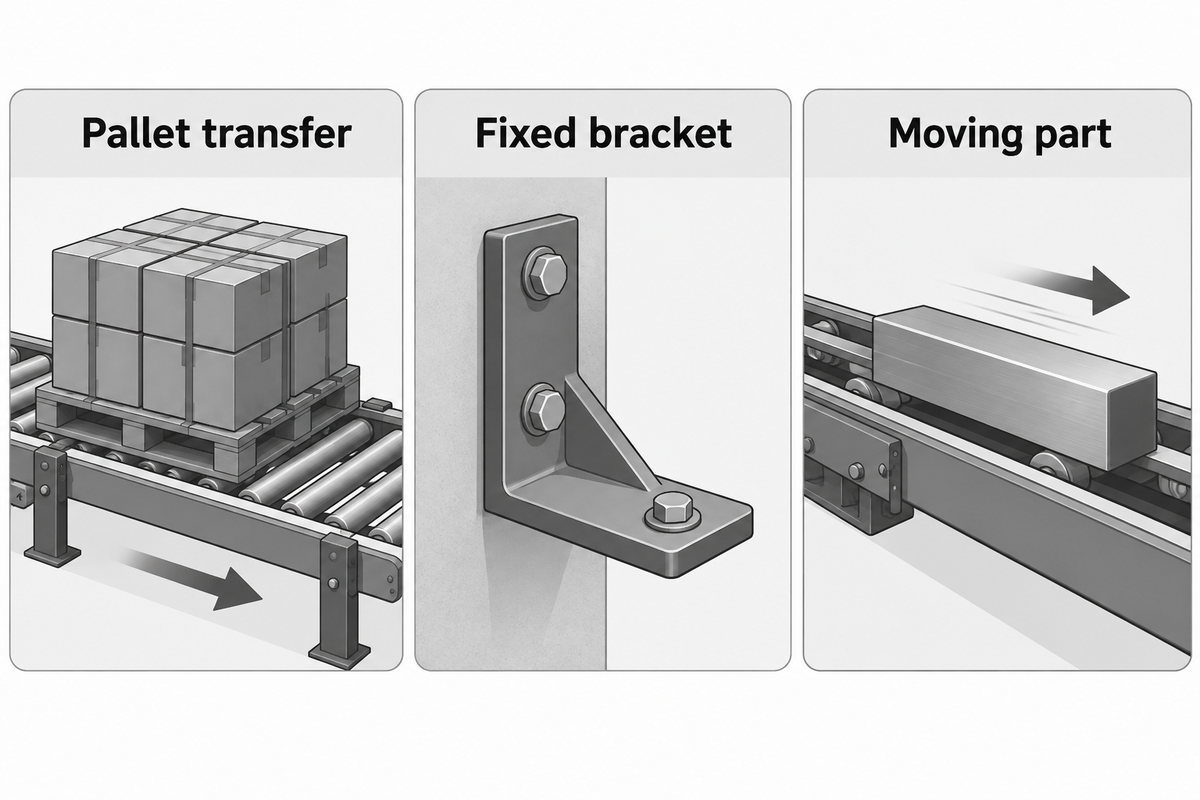
Consider what interrupts the light curtain: a pallet passing through, a bracket in a fixed position, or a narrow part moving through the field. When a person can use the same opening to approach a hazardous area, the safeguarding design must consider that route across all the relevant machine states.
The first three rows compare base cases. The subsequent rows show how direction, tooling, access and other hazards can change the decision.
| Application type | Safeguarding method to evaluate | Evidence to request |
|---|---|---|
| A permitted pallet crosses the opening | Controlled muting for the defined transfer | Accepted input sequence, active protection during transfer and restoration after clearance. |
| A stationary bracket occupies specific beams | Fixed blanking, with expected presence monitored where required by the design | Recorded beam positions, response to movement or removal and remaining access coverage. |
| A narrow strip moves within the field | Floating blanking or the manufacturer’s reduced-resolution mode | Exact interruption tolerance, effective detection capability and updated positioning assessment. |
| People can pass beside the load | Review opening geometry and complementary guarding | Coverage of the remaining routes and a defined response to entry and occupancy. |
| A carrier can enter from both directions | Direction-specific muting logic | Accepted direction and invalid sequence documented separately. |
| A changeover removes the bracket | Reassess fixed blanking and field coverage | Output response to loss of the object and protection for the reopened path. |
| Workpiece height varies between lots | Review active beam positions or the allowable interruption for each approved configuration | Model data and field behavior for each supported setup. |
| A person can remain inside after entry | Occupancy and restart safeguards | Means of detecting or preventing restart with occupancy in the danger zone. |
| Material can eject toward people | Physical containment where the hazard requires it | Barrier coverage and the separate protective role of any safety sensor. |
When a conveyor bracket and a pallet share an opening, see if the device allows the two modes to coexist. Some modes have explicit combination limits on using the muting and blanking functions together. In these safety applications, the machine application then requires separate evidence for fixture behavior, accepted transfer and access around the material.
When selecting a product, start with the function required and then check the options listed for the CCH safety light curtain family. Write the chosen function and configured detection separately from the nominal detection specification, on the equipment list.
What happens when a blanked fixture moves or is removed?
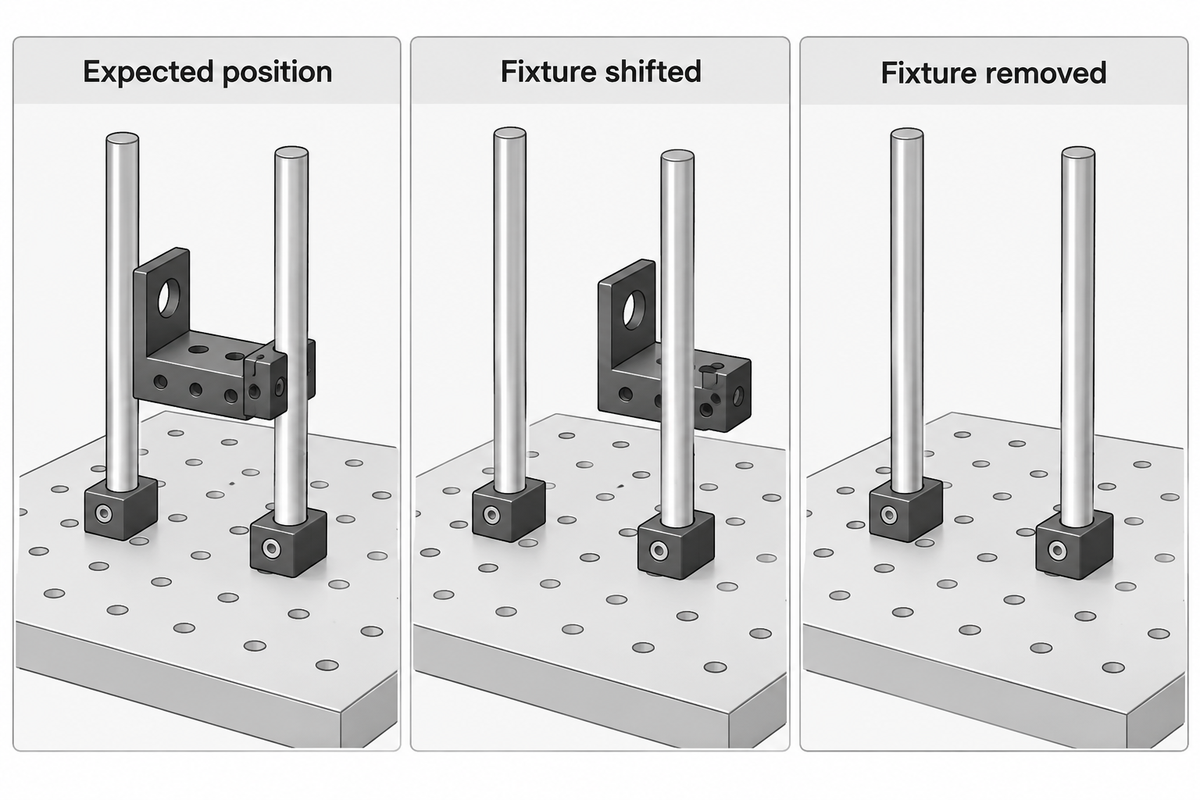
In the GuardShield 450L-E monitored fixed blanking zone, removing the expected obstruction switches the receiver safety outputs off. Other fixed blanking modes may respond in a different manner. In a mode that tolerates an obstruction, the designer must still take into consideration the space the object occupied as well as any route around the object.
The GuardShield 450L-E manual provides an example. In a fixed blanking zone, the receiver anticipates the presence of the configured obstruction. Once the zone becomes unblocked, output signal switching devices (OSSDs) turn off. The manual illustrates the effect of the tolerance selection on acceptable changes.
When tooling changes, compare the old and new fixture geometry before using the previous acceptance record. Check whether the monitored beams are the intended beams, if the remaining field covers the approach, and what happens if the bracket moves. The individual modes and differences in setup are illustrated in the light curtain blanking guide.
Why floating blanking can change the detection distance inputs
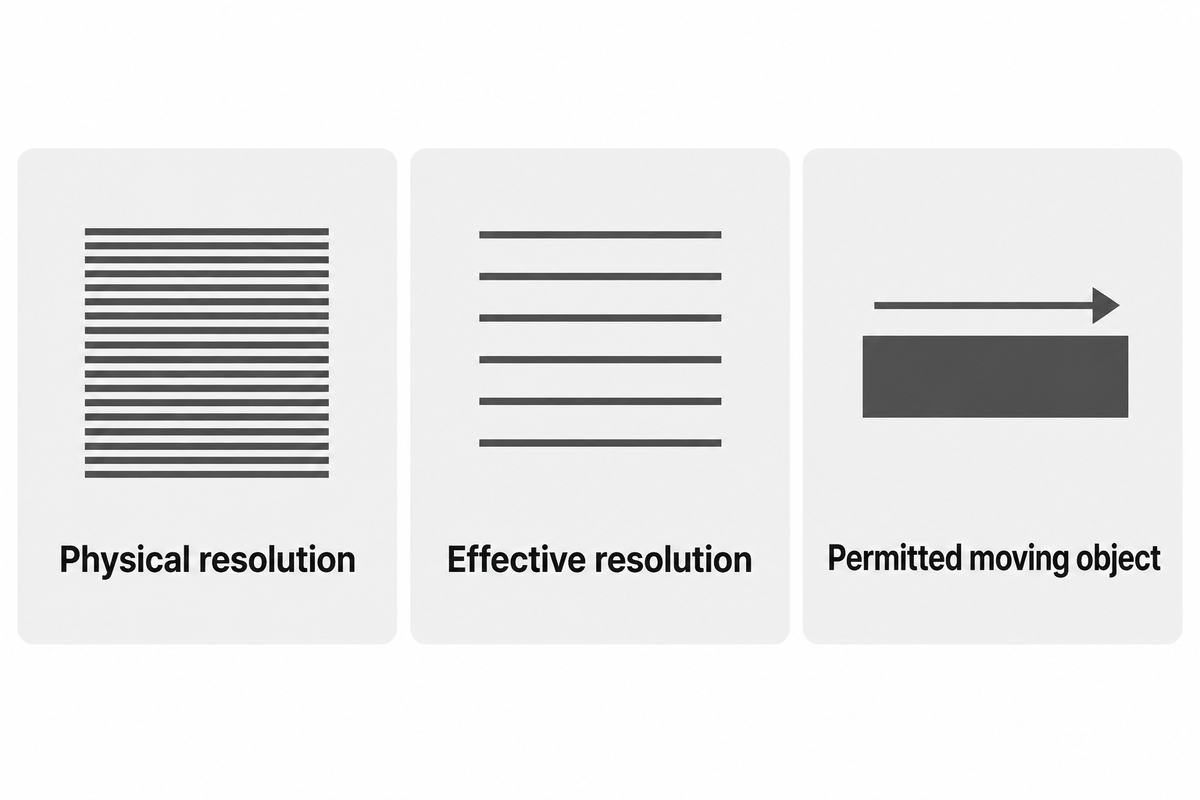
For the configuration in use, determine the effective resolution for the applicable positioning assessment. State the permitted moving object size for the configuration in use. For light curtains used for PSDI operation under U.S. mechanical power press rules, minimum object sensitivity must not exceed one and one-fourth inches (31.75 mm), and blanking of the sensing field is prohibited. Nominal resolution and what the configuration allows may differ, and should be shown as separate fields on a validation form.
The SICK deTec4 operating instructions give this Basic reduced-resolution example. A 14 mm physical resolution maps to 24 mm effective resolution and a 10 mm maximum size for an ignored moving object at one-beam reduction. At two-beam reduction the values are 34 mm and 20 mm respectively. The values provided are for that mode and configuration of the product.
ISO 13855:2024 covers positioning and dimensioning of safeguards with respect to approach to a hazard. The derived separation distances do not consider the use of safeguards solely for presence sensing. Material ejection risks are also not covered. For an applicable positioning calculation, use the configured detection, geometry and measured stopping performance required for the application of protective equipment to detect an approach. Safety distances belong to a particular detection task and approach, so identify what the safety device is meant to detect before transferring a dimension from another installation.
The site’s light curtain positioning resource describes the inputs. Keep the model, validated mode and stopping measurement together at handover.
What to observe when a muted transfer does not finish normally
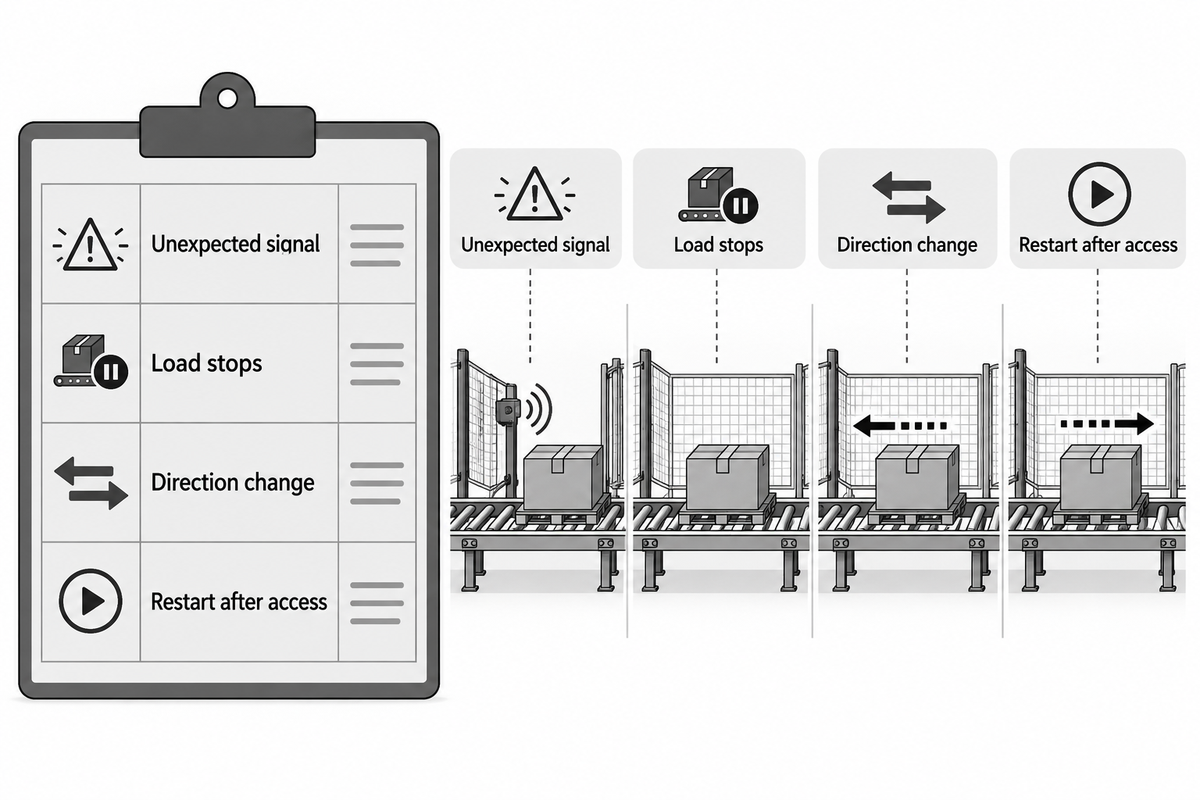
Find the conditions that can generate, extend or remove a mute. A successful pallet pass through the protected area demonstrates the system’s response along the intended path. The acceptance record also contains the expected safe response when the inputs deviate from the expected sequence, a load stops partway through the opening or the machine attempts to resume after someone enters the safeguarded area.
The Mineral Products Association’s incident report 04933 describes a concrete batching plant where a crane was paused because a trolley was out of position. An operator entered through a light curtain, moved the trolley and found that the crane resumed without the expected reset. A standard relay producing signals that falsely indicated a valid mute was identified in the investigation. Use this case to test how the control system rejects false permission and prevents resuming operation after personnel access.
Beam-and-State Test Card
References in these prompts indicate what belongs in the validation plan for an installed machine. Test methods, credible failure modes and acceptance criteria are specified by qualified personnel before testing. Capture the input state, relevant safety output and actual machine response alongside the performance level documentation.
| Case | Observation to capture | What it distinguishes |
|---|---|---|
| Required permission absent | Input sequence and whether the mute is rejected. | A normal clear field from permission to mute. |
| Sensor input out of order | Controller response to an invalid sequence. | Recognition of the process event from an input that happens to be on. |
| Unexpected or intermittent permissive | Specified fault response and whether one false input can initiate a mute. | A completed normal cycle from a fault challenge. |
| Load stops halfway through | The recorded transition from the suspended state under the specified recovery or timeout condition. | A valid transfer in progress from a stalled transfer. |
| Load reverses, if credible | Actual input order and the response defined for the direction change. | Permitted travel from an unexpected approach. |
| Active beam interrupted during partial mute | Which beam was tested, the device output and the machine response. | A live beam from one included in the suspended portion. |
| Reachable opening remains alongside load | Which barriers or safeguards address the remaining route throughout the transfer. | A material passage from a protected personnel access route. |
| Load clears | End of mute, restored field response and any reset condition. | Departure of the load from restoration of the protective function. |
| Restart after access, jam or power interruption | Required restart sequence and safeguards for a person who could remain inside. | A process pause from the safe state and restart conditions. |
The safety output state is one part of the functional safety record linking the input state to the machine’s response and documenting how the safety integrity assumptions were checked. Follow it through safety control and machine response. For arrangements and illustrations, see the safety light curtain guide. Compare illustrations with the current manual and operating limits of the installed equipment.
Which safety document answers which question?
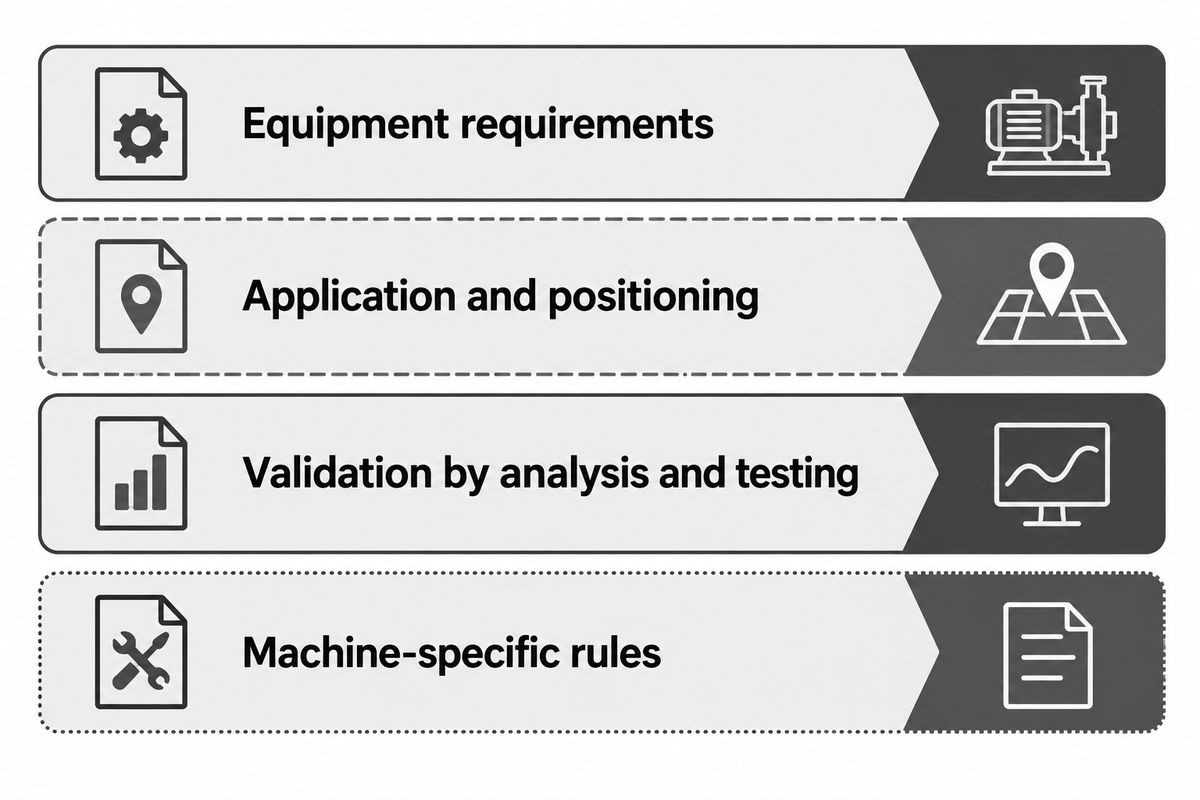
Use the appropriate equipment standard from the International Electrotechnical Commission, the application standard for the selected and configured protection, and the relevant regulation for the machine and jurisdiction. Show the edition or clause on the acceptance record so a reviewer can see the scope of each safety of machinery requirement.
IEC 61496-1:2020 describes general requirements and tests for electro-sensitive protective equipment. IEC 62046:2026 addresses application of sensitive protective equipment. It replaces the 2018 edition, updates muting requirements and adds information on whole-body access. ISO 13849-2:2012 describes validation by analysis and testing of specified safety functions and the achieved properties of the safety-related control system.
Certain U.S. mechanical power presses covered by 29 CFR 1910.217 allow upstroke muting for parts ejection, circuit checking and feeding as permissible under paragraph (c)(3)(iii)(d). Paragraph (h)(9)(iv) separately prohibits blanking the sensing field in presence-sensing device initiation, or PSDI, operation. Establish the press type and operating mode before applying either provision.
What belongs in the equipment quote and handover?
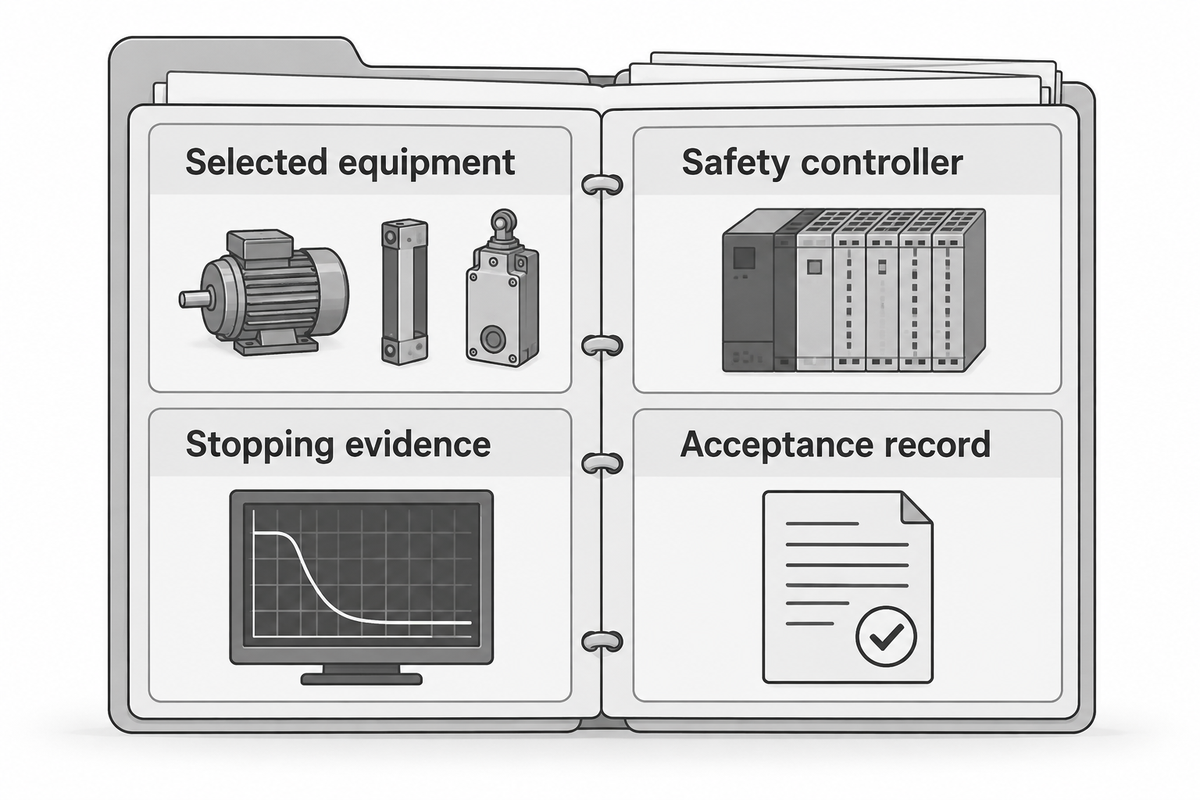
Price the installed function for the selected curtain, any option or external sensors, the safety controller or relay, physical guarding and validation, separately. A new conveyor mute can have a different retrofit scope from a fixture already handled by a supported blanking mode. The safety light curtain price guide separates hardware and installed scope.
Which hardware actually provides the selected function?
CCH documents floating blanking on selected ENT configurations and lists a muting state for its SRB-2A1B safety relay module. Determine the exact device and controller combination. Request the matching model documentation, a description of each component’s function and the acceptance record for the safety-related parts of control systems in the installed application. Include the configuration version, evidence of machine stopping performance and the handover document.
For a retrofit, list the light curtain, the safety relay or safety PLC, and the machine outputs separately. That helps identify the parts of the control system and who validates the changes affected by safety requirements. Keep the validation plan with the precise hardware and software versions chosen for the new configuration.
FAQs about muting and blanking
Q: Do muting sensors need to be safety rated?
Select muting sensors that meet the requirements of the device and safety-function architecture.
Check the muting inputs, signal independence, fault monitoring and sensor requirements in the manufacturer's operating instructions. Include the actual material path and possible access by a person when evaluating the complete installed arrangement. When two muting sensors are used, check the required behavior when either sensor stays active or fails to signal.
Q: What does a muting lamp show?
A muting indicator, also called a muting light, shows the state defined by the machine's design, usually that a muting condition is active.
Use the device documentation to distinguish a normal indication from a fault or override indication. The lamp doesn’t show whether the whole cell is clear, whether individual beams are active, or whether a restart is permitted.
Q: Can an operator reset a light curtain during a mute?
An operator reset during a mute is permitted only where the safety control and the machine's specified restart logic allow it.
Check the prescribed response to the end of a mute, a cleared obstruction and recovery from a fault as separate conditions. An operator action described as reset must be distinguished from a supervised override used under a separately documented recovery procedure.
Q: Does a Type 4 curtain automatically include muting?
No.
Type 4 describes the equipment classification. Muting depends on the exact device, any required function package and the selected control arrangement. Check the model documentation before specifying or ordering a replacement curtain.
Q: When should a fixed guard be considered around a material opening?
Consider a fixed guard for protecting workers when the installed geometry leaves an accessible route around or beside the load, or when a physical barrier has a separate containment role.
Evaluate the opening across the actual load range and machine states, including the time between transfers and foreseeable interruptions that leave people exposed to hazardous situations. An arrangement using equipment to detect the presence of persons can be one part of the design. The selected barrier and sensing functions must together address the access paths and the risk of a person being exposed to hazardous motion identified in the machine risk assessment.
Q: Can I reuse a validation report after a tooling change?
Reuse the earlier validation report only after reviewing what the tooling change affects.
Keep the original report as a record and document the checks and tests needed before relying on the changed setup.
Q: Can the same light curtain use muting and blanking together?
Only if the exact device and its selected operating modes support the combination and the resulting safeguarding can be validated.
Some documented product modes can’t be combined. Read the relevant compatibility information and verify the behavior during normal transfer, the transition back to protection and credible faults. The record should describe the configured function as installed, including any active beams intended to detect the presence of persons and the conditions that end muting.
Discuss your application with CCH
Share the opening geometry, the object that interrupts the field, the controller or relay in use and the behavior you need to validate. Include the installed model of light curtain if any. That information helps to bring the right device documentation for the application.
References & Sources
- IEC 62046:2026 application and commissioning of person-detection protective equipment.
- IEC 61496-1:2020 general equipment requirements and tests.
- ISO 13855:2024 positioning and dimensioning of safeguards.
- ISO 13849-2:2012 validation of safety-related control-system functions.
- OSHA 29 CFR 1910.217 U.S. mechanical power press requirements.
- HSE HSG180 application guidance for electro-sensitive protective equipment.
- MPA Safequarry report 04933 near-hit report involving unintended muting permission.