
Get in touch with QJKH Company
CCH · ENT Series
Safety Light Curtains for Machine Guarding
CCH ENT Series safety light curtains provide 14, 25 and 45 mm detection-resolution options for point-of-operation and access safeguarding. The current ENT platform is designed as a Type 4 safety light curtain family for industrial machine guarding.
Safety Light Curtain Platform
ENT
ENT Series
Three Resolution Options
Select the detection resolution according to the safeguarding requirement, machine opening and required safety distance.
14 mm
Fine Resolution
25 mm
Medium Resolution
45 mm
Access-Oriented
Functional Safety
Type 4
Protection Height
Up to 1960 mm
Enclosure Protection
IP65
02 · Choose by Resolution
Three ENT Resolution Platforms
Resolution is one of the first parameters to determine when selecting a safety light curtain. ENT Series is available in 14, 25 and 45 mm detection-resolution platforms with different protection-height ranges.
ENT14
Fine Resolution
14 mm
Fine-Resolution Detection
The finest detection-resolution platform in the current ENT range, intended for applications requiring detection of smaller objects within the protected field.
Beam Spacing
10 mm
Protection Height
120–1000 mm
Response Time
8.3–30.8 ms
Maximum Beams
101
ENT25
Medium Resolution
25 mm
Medium-Resolution Detection
A middle-resolution platform providing a wider protection-height range while maintaining a smaller detectable-object size than the 45 mm platform.
Beam Spacing
20 mm
Protection Height
120–1720 mm
Response Time
6.8–27.2 ms
Maximum Beams
87
ENT45
Wider Resolution
45 mm
Access-Oriented Detection
The widest detection-resolution platform in the ENT range, supporting taller protected fields for access and opening safeguarding applications.
Beam Spacing
40 mm
Protection Height
120–1960 mm
Response Time
6.0–17.8 ms
Maximum Beams
50
Resolution and safety distance must be evaluated together.
Final selection should be based on the required minimum
detectable object size, machine geometry, stopping performance
and applicable safety requirements.
Calculate Safety Distance →
03 · Core ENT Features
Designed for Faster Setup and Reliable Machine Safeguarding
ENT Series combines safety-rated OSSD outputs with optical synchronization and configurable operating functions designed to simplify installation, commissioning and maintenance.
Optical Synchronization
The emitter and receiver communicate through optical synchronization, reducing the need for a dedicated synchronization wire between the two sensor units.
Emitter ↔ Receiver optical synchronization
Designed to simplify machine-side installation and wiring.
PNP / NPN Configurable OSSD
The receiver supports selectable PNP or NPN output modes, helping adapt the safety light curtain to different machine control architectures.
2 × OSSD safety outputs
Output mode must be verified after configuration before
the machine is returned to service.
CH-A / CH-B Optical Channels
Two configurable optical synchronization channels help reduce interference risks when multiple ENT light curtains are installed in nearby positions.
Channel A / Channel B
The emitter and receiver in the same pair must use the same
optical channel.
Long / Short Range Mode
Receiver sensitivity can be switched between long-range and short-range operating modes to support different installation distances and reduce interference in close-range applications.
LONG / SHORT configurable
Select the appropriate operating mode for the actual
installation conditions.
Infrared Configuration
Selected operating functions can be configured through infrared communication using a compatible smartphone or an optional infrared remote controller.
Smartphone or remote configuration
Supports configuration without adding physical controls
to the sensor housing.
Multi-Level Status Indication
Receiver indicators provide visual information for beam interruption, operating status, output mode, optical channel, received-light level and segment status.
Faster alignment and troubleshooting
Status feedback helps commissioning personnel identify
alignment and interruption conditions more quickly.
Configuration is part of the safety-related commissioning process.
Output mode, optical channel and range settings should be changed
only by qualified personnel with the machine stopped, followed by
functional verification before operation.
04 · Advanced Safeguarding Configurations
Extend the ENT Platform for More Complex Guarding Layouts
Selected ENT configurations support additional safeguarding functions for machines with multiple openings, moving process elements or multi-sided access requirements.
ADV-01
Multi-Opening Protection
||
Cascading
Multiple ENT safety light curtains can be connected through cascading adapters to create a coordinated safeguarding arrangement for larger or more complex machine layouts.
Configuration Direction
ENT light curtains + cascading adapter
ADV-02
Controlled Beam Blanking
≋
Floating Blanking
A configured number of beams can be permitted to remain interrupted without immediately switching the OSSD to the OFF state, subject to the selected blanking logic and configuration conditions.
Configuration Direction
Configurable floating-beam quantity
ADV-03
Multi-Side Layout
∟
Multi-Side Protection
Reflective column components can be used to redirect the protective beam path and create multi-sided guarding around selected machine areas using one ENT light curtain system.
Configuration Direction
ENT + reflective column components
Floating Blanking Principle
The Blanked Position Does Not Need to Be Fixed
With floating blanking, the permitted interruption can move within the detection field rather than being assigned to one permanently fixed beam position. The OSSD response depends on the configured number of blanked beams and the selected operating logic.
Simplified Beam Illustration
Example only
Beam 01
Active
Beam 02
Active
Beam 03
Blanked
Beam 04
Active
Beam 05
Active
Engineering Terminology
Blanking Is Not the Same as Muting
Blanking changes how selected beam interruptions inside the protective field are evaluated.
Muting refers to a controlled temporary bypass of a safety function under defined machine or material-transfer conditions. These functions should not be treated as interchangeable.
Advanced configurations require application-specific safety evaluation.
Cascading, blanking and multi-sided optical layouts can change the
effective safeguarding geometry. Configuration and validation should
be performed by qualified personnel based on the machine risk
assessment and applicable safety requirements.
05 · Applications
Machine Guarding Across Real Industrial Applications
ENT safety light curtains create a monitored access plane between personnel and hazardous machine motion while allowing frequent loading, unloading and production access without a physical door.
Real Application
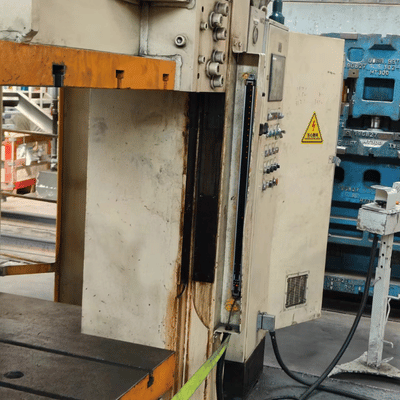
APP-01
Press Machine Guarding
A light curtain can monitor operator access to the point of operation while maintaining an open working area for loading and unloading parts.
Typical Safeguarding Task
Point-of-operation access monitoring
Explore Press Machine Safety →
Real Application
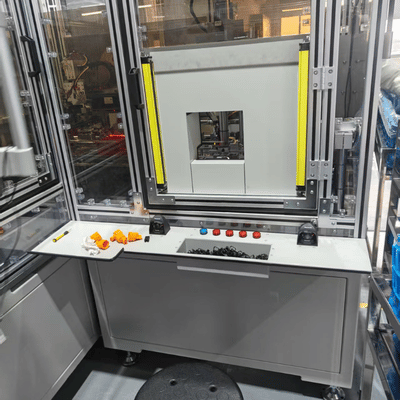
APP-02
Machine Access Protection
Safety light curtains can monitor open machine access areas where operators need regular interaction with the process but hazardous motion must remain protected.
Typical Safeguarding Task
Open-access machine guarding
Explore Machine Safety Applications →
Real Application
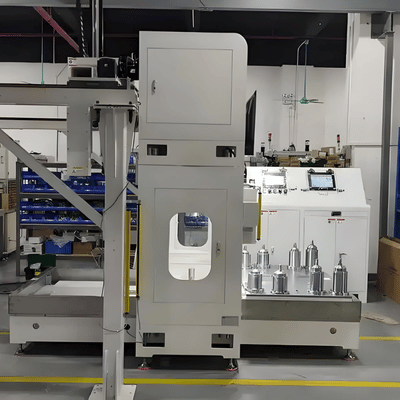
APP-03
Automated Production Lines
ENT light curtains can protect access points around automated machinery, transfer stations and production cells where personnel and machine processes share nearby space.
Typical Safeguarding Task
Production-cell and access-point monitoring
View Industrial Safety Solutions →
Additional Applications
Select the Safeguard Around the Machine Task
The same ENT platform can be configured in different sizes and resolutions according to the access point, protected opening and required safety distance.
Press Brakes
Protect operator access around bending operations while preserving practical access to the working area.
Robot Cells
Monitor personnel entry through selected openings in guarded robotic and automated manufacturing cells.
Material Transfer
Protect openings around conveyors, transfer stations and automated material-flow equipment according to the required guarding logic.
Point of Operation
Presses & forming machinery
Access Opening
Machine and robot cells
Production Access
Automated equipment
Material Flow
Conveyor & transfer openings
The required resolution, protection height and installation distance depend on the specific machine hazard and risk assessment. Application type alone is not sufficient to determine the final light-curtain model.
View All Applications →
06 · Functional Safety & Certification
Functional Safety and EMC Evaluated Separately
ENT Series safety performance and electromagnetic compatibility are supported by separate third-party evaluations. This distinction helps machine builders understand what each certificate actually covers.
ESPE Type
Type 4
IEC 61496-1 / IEC 61496-2
Safety Category
Cat. 4
ISO 13849-1
Performance Level
PL e
ISO 13849-1
Safety Integrity Level
SIL 3
IEC 61508
Functional Safety Certification
FS/71/220/24/1456
SGS-TÜV Saar
Functional safety certification for the ENT Series safety light curtain platform, covering the safety architecture and performance requirements relevant to machine safeguarding.
Certified Product
Safety Light Curtain · ENT Series
Type
Type 4
ISO 13849
Cat. 4 · PL e
IEC 61508
SIL 3 · HFT = 1
Certification Date
15 July 2024
EMC Certificate of Conformity
AE 50623910 0001
TÜV Rheinland
Electromagnetic compatibility evaluation for identified ENT safety light curtain models under the EU EMC framework.
Product
Safety Device · Safety Light Curtain
EU Directive
2014/30/EU · Electromagnetic Compatibility
Test Standard
EN IEC 61326-1:2021
Report No.
CN24DWW7 001
Certificate Date
25 March 2024
Standards Framework
Different Standards Address Different Parts of the Safety Function
Type, Category, Performance Level and SIL should not be treated as interchangeable labels. They describe different aspects of product and safety-system performance.
IEC 61496
Type 4 ESPE
Product-specific requirements for electro-sensitive
protective equipment.
ISO 13849-1
Cat. 4 · PL e
Safety-related control system architecture and performance
level.
IEC 61508
SIL 3
Functional safety integrity requirements used in the
certification assessment.
EN IEC 61326-1
EMC Evaluation
Electromagnetic compatibility assessment is separate from
the functional safety certification.
i
Functional safety certification and EMC conformity are not the same certification.
The SGS-TÜV Saar certificate addresses the ENT Series functional
safety performance. The TÜV Rheinland certificate addresses
electromagnetic compatibility under EU Directive 2014/30/EU.
CE marking for a complete product or machine depends on compliance
with all applicable EU requirements, not the EMC certificate alone.
07 · Technical Specifications
ENT Series Technical Data
Category-level specifications are shown below for initial engineering selection. Protection height, response time and other model-dependent values should be verified against the selected ENT model.
Group 01
Safety Performance
| ESPE Type | Type 4 · IEC 61496 |
|---|---|
| Category | Cat. 4 · ISO 13849 |
| Performance Level | PL e · ISO 13849 |
| Safety Integrity Level | SIL 3 · IEC 61508 |
| PFH | 1.42 × 10⁻⁸ |
| Hardware Fault Tolerance | HFT = 1 |
| Diagnostic Coverage | >99% |
| Diagnostic Test Interval | <10 minutes |
Group 02
Optical Performance
| Light Source | Infrared LED · 850 nm center wavelength |
|---|---|
| Detection Resolution | 14 mm / 25 mm / 45 mm |
| Beam Spacing | 10 mm / 20 mm / 40 mm |
| Protection Height | Model-dependent · up to 1960 mm ENT14, ENT25 and ENT45 have different model ranges. |
| Synchronization | Optical synchronization |
| Optical Channels | CH-A / CH-B configurable |
| Range Mode | LONG / SHORT configurable |
Group 03
Electrical & Output
| Operating Voltage | 24 V DC ±20% |
|---|---|
| Emitter Current | <200 mA |
| Receiver Current | <200 mA · no load |
| Safety Output | 2 × OSSD |
| Output Type | PNP / NPN configurable |
| Maximum Output Load | ≤100 mA per output |
| Startup Time | <3 s |
| Protection Functions | Overvoltage · overcurrent · output short-circuit protection |
Group 04
Environmental & Mechanical
| Protection Rating | IP65 |
|---|---|
| Profile | 34 × 28 mm |
| Operating Temperature | −10°C to +55°C No frost or condensation on the optical surface. |
| Storage Temperature | −40°C to +70°C |
| Operating Humidity | 35–85% RH |
| Storage Humidity | 35–95% RH |
| Incandescent / Fluorescent | 3,000 lux |
| Sunlight Immunity | 10,000 lux |
Current Range Codes
Select Distance by Configuration
The current product-number structure lists A, B and C distance configurations. For applications outside these ranges, confirm the currently available configuration with CCH Engineering.
Range Code A
0–10 m
Standard sensing-distance configuration.
Range Code B
0–16 m
Longer standard sensing-distance configuration.
Range Code C
0–5 m
Short-range configuration for selected applications.
Use the model-specific datasheet for final engineering selection.
Response time, beam count, protection height and available
configurations vary by model. Safety distance must be calculated
using the actual selected light-curtain response time together
with machine stopping time and applicable safety requirements.
08 · Selection Guidance
Select the Light Curtain from the Machine Risk Backwards
The application name alone does not determine the correct safety light curtain. Start with the required detection capability, then verify protection height, sensing distance, overall response time and the required separation distance.
01
Detection Requirement
Select Resolution
Determine the minimum detectable object size required by the machine safeguarding design and risk assessment.
ENT Options
14 mm / 25 mm / 45 mm
02
Guarded Opening
Select Protection Height
Measure the machine opening or access area that must remain inside the protective field.
Series Maximum
Up to 1960 mm, model-dependent
03
Installation Geometry
Confirm Sensing Distance
Measure the actual emitter-to-receiver installation distance and select an appropriate currently available ENT distance configuration.
Current Range Codes
A: 0–10 m · B: 0–16 m · C: 0–5 m
04
System Response
Determine Overall Response Time
Account for the selected light-curtain response, safety-related control response, machine stopping performance and applicable response-time tolerance.
ENT Sensor Response
Model-dependent · 6.0–30.8 ms
05
Final Installation
Determine Separation Distance
Evaluate approach speed, overall response time, reaching through, over or under the protective device, and any application-dependent supplemental distance.
Current Tool
ISO 13855:2024 Calculator
ISO 13855:2024
Separation Distance Is More Than Stop Time and Resolution
The current calculation structure considers the overall response time together with the applicable reaching-distance allowance and supplemental distance. Reaching over, through and under the protective device must be evaluated for the actual machine geometry.
S = (K × T) + DDS + Z
S = separation distance · K = approach speed · T = overall
system response time · DDS = applicable reaching
distance · Z = supplemental distance. Final safeguarding design
must follow the current standard and actual machine risk
assessment.
Open ISO 13855:2024 Calculator →
09 · Installation & Accessories
Flexible Mounting for Different Machine Structures
ENT safety light curtains support multiple mounting arrangements for machine frames, production equipment and guarded openings. Final installation should provide stable alignment and maintain the required protective-field geometry.
Front / Side Mount
Integrated bracket arrangement for mounting the light curtain from the front or side of the machine structure.
Front/side integrated mounting bracket and shock-absorbing
pad are available.
Magnetic Mount
Magnetic brackets provide an alternative installation method for compatible machine structures where magnetic mounting is appropriate.
Uses magnetic mounting components identified in the ENT
accessory system.
Pipe Mount
Pipe mounting provides a dedicated support structure when the light curtain cannot be mounted directly to the machine frame.
Pipe bracket, support pipe and adjustment components are
available within the mounting system.
T-Slot Mount
T-slot brackets provide an adjustable mounting direction for machine frames and structures using compatible slot systems.
The mounting arrangement includes T-bolt and adjustable-angle
bracket components.
Protective Cover
A protective cover can be added where the light curtain needs additional mechanical shielding from nearby machine activity.
The catalogue specifies the protective-cover option based on
the T-slot mounting arrangement.
Installation Workflow
Mount, Align and Verify Before Operation
Correct mechanical installation is only the beginning. Alignment, signal strength and beam-interruption behavior must be verified before the safety light curtain is placed into service.
STEP 01
Assemble & Position Brackets
Install the selected brackets while retaining sufficient
adjustment for final alignment.
STEP 02
Complete Wiring
Confirm power, grounding and receiver safety-output wiring
before energizing the system.
STEP 03
Align Emitter & Receiver
Adjust position and angle so both units face each other and
the protected beam path is correctly aligned.
STEP 04
Check Signal Level
Use the receiver indicators to confirm sufficient optical
alignment margin for stable operation.
STEP 05
Secure the Installation
Tighten the mounting hardware after the optimum alignment
position has been established.
STEP 06
Verify Beam Interruption
Test the protective field using an object corresponding to
the required detection resolution and verify the expected
output response.
Alignment Feedback
Use the LEVEL Indicators to Confirm Alignment Margin
Beam alignment should not be judged only by whether the OSSD reaches the ON state. The receiver LEVEL indicators provide additional information about received-light strength and help establish a more stable installation.
No LEVEL Light
Alignment may be achieved, but signal strength is insufficient
for stable operating margin.
LEVEL 1
Alignment is sufficient for stable operation.
Both LEVEL Lights
Indicates excellent optical alignment.
Available Accessory Types
Mechanical Installation Components
Front / Side Mount Integrated Bracket
Shock-Absorbing Pad
Magnetic Mounting Bracket
Pipe Mounting Components
T-Slot Mounting Bracket
Protective Cover & Bracket
!
Installation position is part of the safety function.
Mounting flexibility does not replace the required safety-distance
calculation. The protective field must be positioned so hazardous
machine motion can reach a safe state before a person can reach
the hazard. Final installation and functional verification should
be performed by qualified personnel.
10 · Project Support
Tell Us What Your Machine Needs to Protect
Send CCH the basic machine layout and safeguarding requirements. We can help narrow the ENT resolution, protection height, sensing-distance configuration and installation direction for preliminary project selection.
Engineering Support
Start with the Machine, Not a Model Number
If the exact ENT model is not yet known, send the application information first. Model selection should follow the actual hazard and machine geometry.
What to Send CCH
Six Inputs for Faster Preliminary Selection
A machine photo or layout drawing is also useful where the guarded opening or mounting arrangement is difficult to describe in text.
INPUT 01
Machine / Application Type
Press, bending machine, robot cell, automated equipment,
conveyor opening or other machine.
INPUT 02
Required Protection Area
Opening dimensions and the height that must be covered by
the protective field.
INPUT 03
Emitter-to-Receiver Distance
Actual installation distance across the protected opening.
INPUT 04
Detection Requirement
Required resolution or minimum detectable object size where
already defined by the safeguarding design.
INPUT 05
Machine Stopping Information
Stop time or measured stopping performance used for the
safety-distance calculation.
INPUT 06
Control & Special Functions
PNP / NPN requirement and any cascading, floating blanking
or multi-side protection requirement.
Step 01
Define the Hazard
Step 02
Select ENT Configuration
Step 03
Calculate Safety Distance
Step 04
Install & Validate
ENT Series · Safety-rated machine guarding
Final product selection, safety distance, installation and
validation remain application-specific and should be based on
the actual machine risk assessment and applicable safety
requirements.
Type 4
Cat. 4
PL e
SIL 3